

When people think about the deadliest animals on Earth, their minds usually jump to large predators—lions, sharks, crocodiles, or bears. Yet in reality, some of the most lethal creatures on the planet are small, quiet, and easy to overlook. They don’t rely on strength, speed, or sharp teeth. Instead, they use chemistry. In the natural world, poison and venom are among the most efficient killing tools ever evolved, capable of shutting down the human body in minutes—or sometimes seconds.
Poisonous and venomous animals exist on every continent and in nearly every environment, from dense rainforests and dry deserts to coral reefs and open oceans. What makes them especially dangerous is not just how toxic they are, but how quickly their toxins act. Some interfere with nerve signals, freezing muscles and stopping breathing. Others attack the heart directly, disrupt blood clotting, or cause massive tissue damage. In many cases, the victim may appear fine at first, only to collapse moments later as the toxin spreads.

Scientists measure toxicity using laboratory benchmarks such as LD50, but real-world danger depends on much more than numbers. The speed of toxin delivery, the amount injected or absorbed, the route it takes through the body, and how fast medical help becomes available all determine whether someone survives an encounter. A toxin that takes hours to kill may be survivable with treatment, while one that acts in under five minutes leaves almost no margin for error.
What makes this topic even more unsettling is how ordinary many encounters can be. A casual swim, a step on a reef, a curious touch, or a single bite may be all it takes. Some of the animals on this list are aggressive, but many are not. They rely on poison or venom purely as a defense, striking only when threatened or accidentally disturbed. In those moments, evolution shows no mercy.
The animals below are among the most poisonous and venomous known to science, ranked not only by how deadly their toxins are, but by how fast they can end a human life under the wrong circumstances. Their existence is a reminder that in nature, danger does not always announce itself loudly—and sometimes the smallest creatures are the fastest killers of all.
The Most Poisonous Animals In The World: And How Quickly They Kill You?
Box Jellyfish

How Quickly You’ll Die: Under 5 minutes
Often cited as the most poisonous animal in the ocean, the box jellyfish is among the deadliest creatures humans can encounter. While not every species within this group is lethal, those that are possess toxins powerful enough to kill in minutes. Encounters are most common in waters off northern Australia, though related species exist throughout the Indo-Pacific region.
The box jellyfish’s tentacles are lined with thousands of microscopic stinging cells that fire upon contact. These cells inject toxins that attack the nervous system and heart simultaneously. Victims may experience immediate, excruciating pain followed by paralysis. In severe cases, cardiac arrest can occur so rapidly that drowning becomes inevitable before help arrives.
Because box jellyfish are nearly transparent, swimmers often do not see them until it is too late. Survivors frequently suffer permanent scarring, and the pain from a single sting can persist long after the initial injury.
Poison Dart Frog

How Quickly You’ll Die: Around 5 minutes
Despite its small size—most species measure just a couple of inches long—the poison dart frog ranks among the most toxic animals in the world. Native to the rainforests of South America, this brightly colored amphibian carries enough poison to kill multiple adult humans.
Indigenous tribes have long exploited this toxicity by coating blowgun darts with frog secretions, giving the animal its name. Interestingly, poison dart frogs raised in captivity often lose their toxicity entirely. This has led scientists to conclude that the frogs acquire their poisons from their diet, likely from toxic insects and plants found in their natural habitat.
The toxin interferes with nerve signaling, causing rapid paralysis and cardiac failure. Even minimal exposure can be fatal without immediate medical attention.
Australian Funnel-Web Spider

How Quickly You’ll Die: 5–15 minutes
Australia is home to some of the world’s most dangerous spiders, and the Australian funnel-web spider is often considered the most lethal among them. This aggressive arachnid has been responsible for numerous deaths, particularly before the development of effective antivenom.
A bite from a funnel-web spider delivers a potent neurotoxin that targets the nervous system. Symptoms escalate quickly, including intense pain, muscle spasms, difficulty breathing, and eventual paralysis. In several documented cases, victims died within minutes of being bitten, especially when the bite occurred near the head or torso.
Modern antivenom has dramatically reduced fatalities, but the spider remains extremely dangerous without prompt treatment.
Blue-Ringed Octopus

How Quickly You’ll Die: Under 10 minutes
The blue-ringed octopus is small, beautiful, and deadly. Found in shallow waters of the Indian and Pacific Oceans—particularly near Australia and Japan—this tiny cephalopod carries enough venom to kill dozens of humans.
Its bite is often painless and may go unnoticed at first. Within minutes, however, the toxin begins to take effect. Victims experience numbness, loss of motor control, vomiting, and severe difficulty breathing. Eventually, complete respiratory paralysis sets in while the heart continues to beat, leaving the victim conscious but unable to breathe.
There is no antivenom. Survival depends entirely on immediate respiratory support until the toxin clears the body.
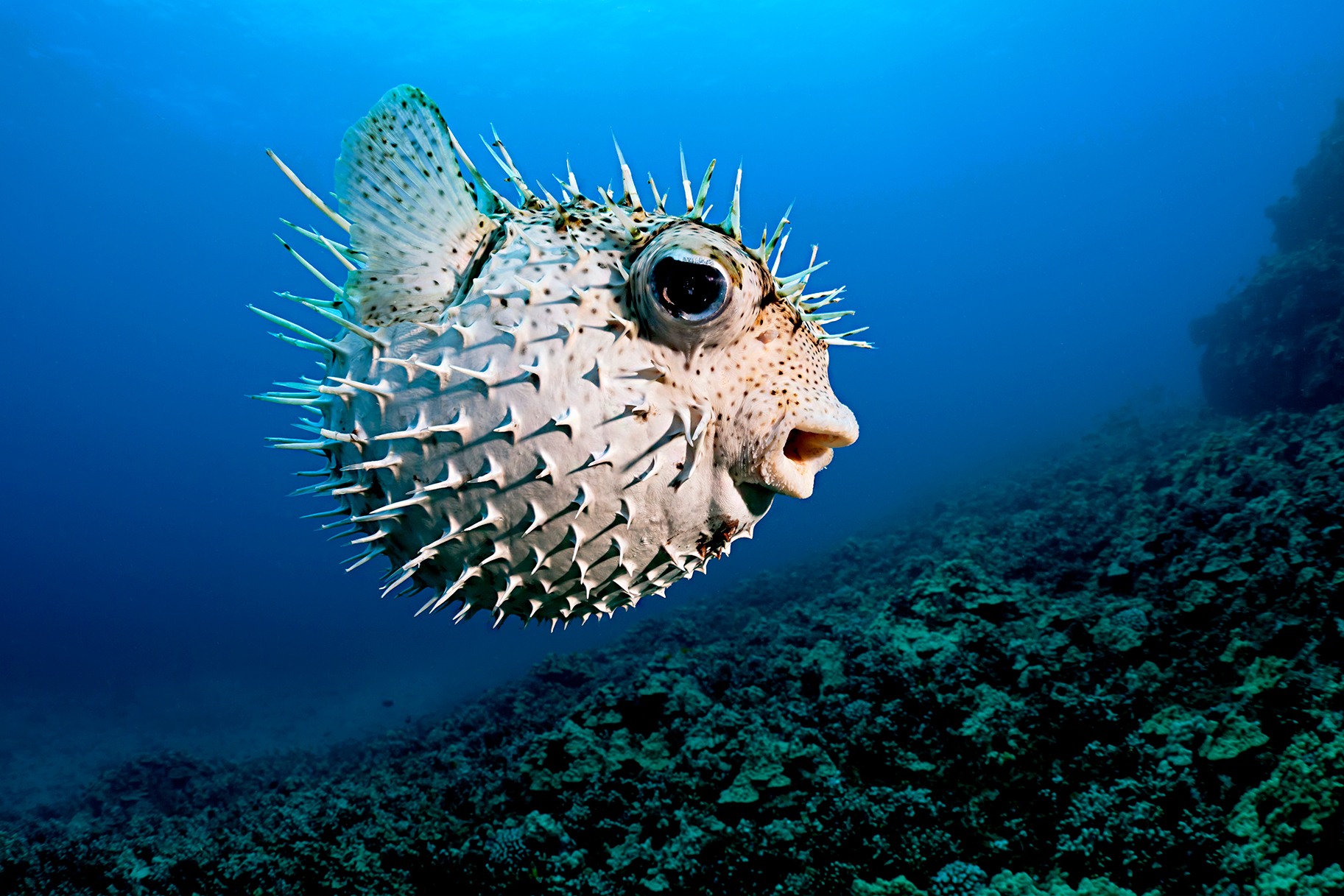
Puffer Fish

How Quickly You’ll Die: 20 minutes to 24 hours
Puffer fish may appear harmless or even amusing, but they carry one of the most powerful toxins known to science. Tetrodotoxin, found in their organs and skin, is over a thousand times more toxic than cyanide.
Once ingested, the toxin causes progressive paralysis, starting with numbness of the lips and tongue before spreading throughout the body. As respiratory muscles fail, suffocation becomes inevitable. Brain damage may occur before death, prolonging suffering.
Despite this danger, puffer fish are considered a delicacy in Japan. Only highly trained and licensed chefs are permitted to prepare the dish, as a single mistake can be fatal.
King Cobra

How Quickly You’ll Die: Within 30 minutes
The king cobra is the largest venomous snake in the world and one of the most feared. While its venom is not the most potent by volume, the sheer amount delivered in a single bite makes it extraordinarily dangerous.
A full envenomation can deliver enough toxin to kill dozens of humans or even bring down an elephant. The venom attacks the nervous system, leading to paralysis and eventual respiratory failure. Without treatment, death can occur rapidly.
King cobras are typically found in Southeast Asia and India and are known for their intelligence and defensive displays, which often precede a strike.
Belcher’s Sea Snake

How Quickly You’ll Die: 30 minutes to a few hours
Belcher’s sea snake is often cited as one of the most venomous snakes on the planet when venom potency is measured drop for drop. Found in the warm coastal waters of Southeast Asia and northern Australia, this highly specialized marine snake spends most of its life hunting fish in coral reefs and shallow seas.
Fortunately, Belcher’s sea snake is generally calm and reluctant to bite. Many documented bites occur when the snake is accidentally caught in fishing nets. When envenomation does occur, however, the effects can be severe. The venom contains powerful neurotoxins and myotoxins that attack muscles and the nervous system simultaneously.
Early symptoms may seem mild, sometimes leading victims to delay treatment. As the toxin spreads, muscle breakdown accelerates, kidney failure may follow, and respiratory paralysis can occur. Without medical intervention, death becomes increasingly likely as time passes.
Inland Taipan

How Quickly You’ll Die: Around 30–45 minutes
Often referred to as the most venomous snake in the world based on toxicity alone, the inland taipan possesses venom strong enough to kill over a hundred adult humans with a single bite. Native to remote regions of central Australia, this snake is rarely encountered, which is fortunate given its extreme lethality.
The inland taipan’s venom is a complex cocktail of neurotoxins, hemotoxins, and myotoxins. Together, these compounds cause rapid paralysis, internal bleeding, and widespread muscle damage. Blood clotting is disrupted, leading to hemorrhage, while nerve signals shut down vital functions.
Before antivenom became available, bites were almost universally fatal. Today, survival depends on immediate medical care. Even with treatment, recovery can be prolonged due to the extensive damage caused by the venom.
Brazilian Wandering Spider

How Quickly You’ll Die: 30 minutes to several hours
The Brazilian wandering spider is considered the most dangerous spider in the world. Found throughout South America, this large and aggressive arachnid often wanders into homes, shoes, and clothing, increasing the risk of accidental encounters.
Its venom contains powerful neurotoxins that interfere with nerve signaling and muscle control. Early symptoms include intense pain, sweating, elevated heart rate, and muscle spasms. As the toxin progresses, paralysis and respiratory failure may occur.
In severe cases—particularly in children or individuals with compromised health—the venom can be fatal without treatment. Modern antivenom has significantly reduced mortality rates, but the spider remains a serious medical threat in its native range.
Stonefish

How Quickly You’ll Die: 1–2 hours
The stonefish is widely regarded as the most venomous fish in the world. Perfectly camouflaged to resemble rocks or coral, it rests motionless on the ocean floor, making it easy for swimmers to step on accidentally.
Venom is delivered through sharp dorsal spines that inject toxins when pressure is applied. The pain is immediate and extreme, often described as unbearable. Along with intense pain, victims may experience swelling, tissue damage, paralysis, and cardiovascular collapse.
Without treatment, death can occur within a few hours. Immersing the affected area in hot water can help neutralize the venom temporarily, but professional medical care is essential to prevent serious complications.
Marbled Cone Snail

How Quickly You’ll Die: 1–5 hours
The marbled cone snail is one of the ocean’s most deceptively dangerous animals. Its beautifully patterned shell often attracts collectors, but handling this snail can be fatal.
Unlike passive poisonous animals, cone snails actively inject venom using a specialized, harpoon-like tooth. The venom is a complex mix of neurotoxins designed to instantly immobilize prey. In humans, the effects can include numbness, paralysis, respiratory failure, and cardiac arrest.
There is no antivenom for cone snail venom. Survival depends entirely on rapid medical intervention and life support until the toxins are metabolized by the body. Because symptoms can escalate quickly, even brief contact can be deadly.
The animals on this list reveal an uncomfortable truth about the natural world: death does not always come from obvious threats. It often comes from creatures that are small, silent, and perfectly adapted to end a life without warning. Poison and venom are not random weapons. They are precise tools shaped by millions of years of evolution, refined to act quickly, efficiently, and with devastating effect.
What makes these animals especially dangerous is not just how lethal their toxins are, but how easily humans can underestimate them. A shallow swim, a misplaced step, a moment of curiosity, or a simple lack of awareness can turn into a medical emergency within minutes. In many cases, survival depends less on strength or bravery and more on knowledge, caution, and pure luck.
Understanding how these toxins work—and how fast they act—doesn’t exist to fuel fear. It exists to sharpen respect. These animals are not monsters, nor are they hunting humans. They are specialists, surviving in harsh environments where chemical defenses offer the only reliable advantage. When humans cross paths with them, the danger lies not in the animal’s intent, but in our ignorance of its capabilities.
In a world where nature still operates by unforgiving rules, these creatures stand as reminders that evolution does not care about size, beauty, or reputation. It rewards efficiency. And sometimes, efficiency is measured in minutes.