
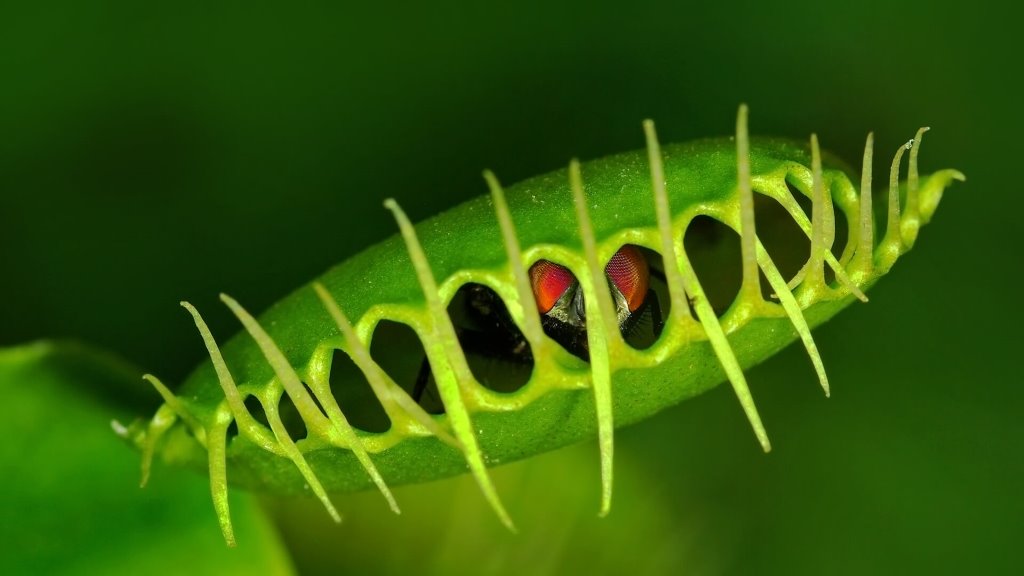

Carnivorous plants already sit at the edge of how people understand nature. Plants are expected to be passive, rooted, and harmless. Carnivorous plants break that expectation by turning leaves into traps and absorbing nutrients from animals. Most of the time, those animals are insects, which makes the idea easier to accept.
The discomfort begins when scale changes.
There are documented cases where carnivorous plants trap animals that are not insects at all. Frogs, lizards, rodents, and on very rare occasions, small birds have been found inside these traps. These events are uncommon and usually accidental, but they are real. They challenge the idea that plants and animals occupy completely separate roles in ecosystems.
This article explores how and why these events happen, what limits plant predation, and why evolution never pushed carnivorous plants further than it already has.
Why Carnivorous Plants Evolved
Carnivorous plants did not evolve because they were strong competitors. They evolved because they were weak ones.
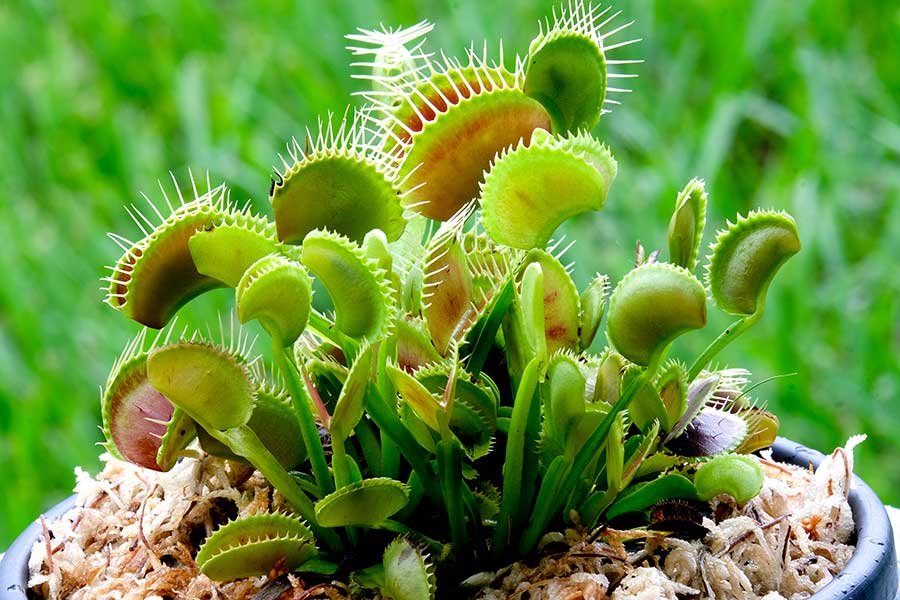
Most carnivorous plants live in environments where soil is almost useless. Acidic bogs, nutrient-poor wetlands, sandy plains, and tropical highlands strip nitrogen and phosphorus from the ground. In these places, ordinary plants struggle to survive.
Nitrogen is essential for growth. Without it, plants cannot produce proteins, enzymes, or chlorophyll efficiently. Competing for nutrients underground becomes a losing strategy, so carnivorous plants took a different path.
Instead of fighting other plants, they began sourcing nutrients from animals that landed on them. Insects were abundant, rich in nitrogen, and already interacting with plant surfaces. Over millions of years, even small advantages mattered. Sticky secretions, curled leaves, and primitive pits slowly evolved into specialized traps.
Carnivory was not an upgrade. It was a compromise that allowed plants to survive where others could not.
How Carnivorous Plant Traps Work
Despite how they are often portrayed, carnivorous plants do not hunt. They do not choose prey or react intelligently. Their traps work because of physics and chemistry.
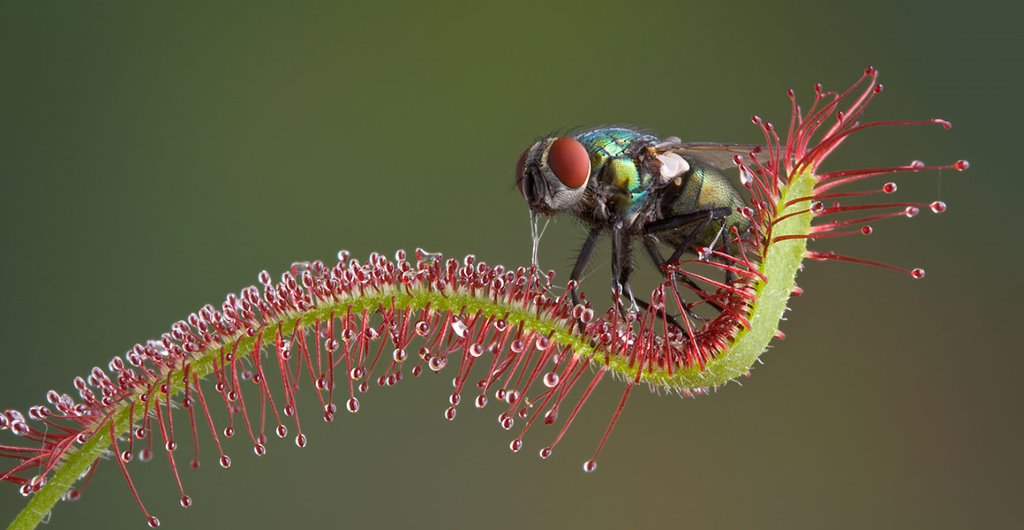
There are only a few basic trap types. Snap traps close when trigger hairs are touched. Pitfall traps rely on depth, slippery surfaces, and gravity. Sticky traps immobilize prey with adhesive fluids. Suction traps operate underwater, pulling prey inside using pressure differences.
All of these systems evolved to capture insects within a narrow size range. That range provides the best balance between nutrition and risk. Anything larger than that range introduces problems the plant is not built to handle.
But once a trap exists, it cannot distinguish between intended prey and accidental victims.
Venus Flytraps and Unintended Captures
The Venus flytrap is the most famous carnivorous plant because it moves. That movement makes it feel deliberate and almost animal-like.
In reality, Venus flytraps are energy-efficient and cautious. Their traps only close fully if trigger hairs are touched multiple times in quick succession. Even after closing, digestion does not begin unless the trapped object continues to move, releasing chemical signals that confirm living prey.
Despite this precision, small vertebrates are occasionally trapped. Young frogs, tiny lizards, and hatchling snakes sometimes enter flytraps while chasing insects or seeking shade and moisture.
When this happens, the plant usually does not benefit. The prey is too large to digest efficiently. It may rot inside the trap, killing the leaf and sometimes damaging the plant. In other cases, the animal escapes after tearing the trap open.
These events are evolutionary failures, not successes. They exist because no biological system can completely eliminate accidents.
Pitcher Plants and Gravity-Based Traps
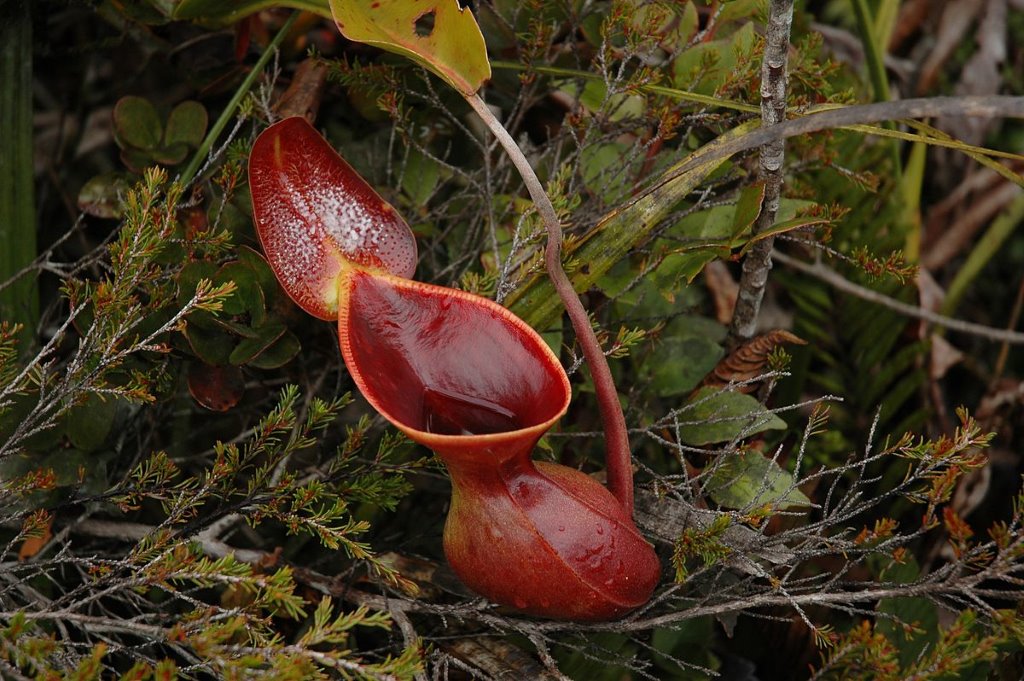
Pitcher plants account for most documented cases of animals trapped by carnivorous plants.
These plants build deep, fluid-filled containers with slick rims and smooth inner walls. Nectar attracts prey to the opening, and once footing is lost, escape becomes extremely difficult.
Small pitcher species mainly trap insects. Larger tropical species can produce pitchers large enough to hold significant amounts of liquid. In these plants, frogs, lizards, rodents, and occasionally birds have been found drowned inside.
These animals usually fall in while feeding on nectar, chasing insects, or moving carelessly during rain. The plant does not actively target them, but once gravity takes over, the outcome cannot be reversed.
Even here, large prey is often harmful. Decomposition can disrupt the internal balance of the trap, encourage bacterial growth, and damage plant tissue. Some pitchers die entirely after such events.
Sticky Traps and Slow Immobilization
Sundews use a different approach. Their leaves are covered in glistening droplets of sticky fluid that resemble dew.
When an insect lands, it becomes stuck. As it struggles, nearby tentacles bend inward, increasing contact. Over time, the leaf may curl around the prey, and digestion begins.
Most sundews are too small to trap vertebrates, but rare cases involving very small frogs or hatchlings have been recorded. These animals are immobilized rather than crushed. Death occurs slowly through exhaustion and stress.
It is not dramatic. It is simply efficient in a way that feels disturbingly indifferent.
Underwater Suction Traps
Bladderworts live underwater or in saturated soil and use tiny vacuum traps that activate in milliseconds.
These traps usually capture microscopic organisms, but larger species can trap small aquatic animals such as tadpoles or fish larvae. Once triggered, escape is impossible.
These events are rare and offer limited nutritional benefit, reinforcing the idea that vertebrate trapping is incidental rather than adaptive.

Why Trapping Animals Is Usually a Disadvantage
At first glance, it seems logical to assume that a larger animal would mean a larger nutritional reward. In reality, for carnivorous plants, the opposite is often true.
Carnivorous traps are expensive structures. They require specialized tissues, constant moisture control, and the production of digestive enzymes. Each trap represents a significant investment of energy in environments where energy is already scarce. Insects provide a reliable return on that investment. Vertebrates do not.
Large prey decomposes unevenly. Rotting tissue encourages bacterial and fungal growth that can overwhelm the plant’s digestive system. In pitcher plants, a single large carcass can destabilize the chemical balance of the fluid inside the trap, killing beneficial microbes and damaging the plant’s tissues. In snap traps, oversized prey can tear leaves or prevent proper closure, permanently disabling the trap.
From an evolutionary perspective, these outcomes are costly failures. Natural selection strongly favors consistency and efficiency, not dramatic one-off gains. This is why carnivorous plants remain specialists rather than expanding toward larger prey.
When Animals Escape the Trap
Not every animal that enters a carnivorous plant dies there.
Small frogs and lizards have been observed escaping from pitcher plants after prolonged struggles. In Venus flytraps, prey that is too large may trigger closure but fail to sustain the chemical signals required for digestion, causing the trap to reopen days later. In sticky traps, excessive movement can sometimes tear plant tissue, allowing the animal to break free.
These escapes highlight an important truth: carnivorous plants are not dominant predators. Their traps work best within narrow limits. Once those limits are exceeded, control is lost, and the plant becomes vulnerable.
In many cases, escape is the least damaging outcome for the plant. A living animal that escapes usually causes less harm than a decomposing one left behind.
Animals That Live Inside Carnivorous Plants
One of the most misunderstood aspects of carnivorous plants is that not everything inside a trap is prey.
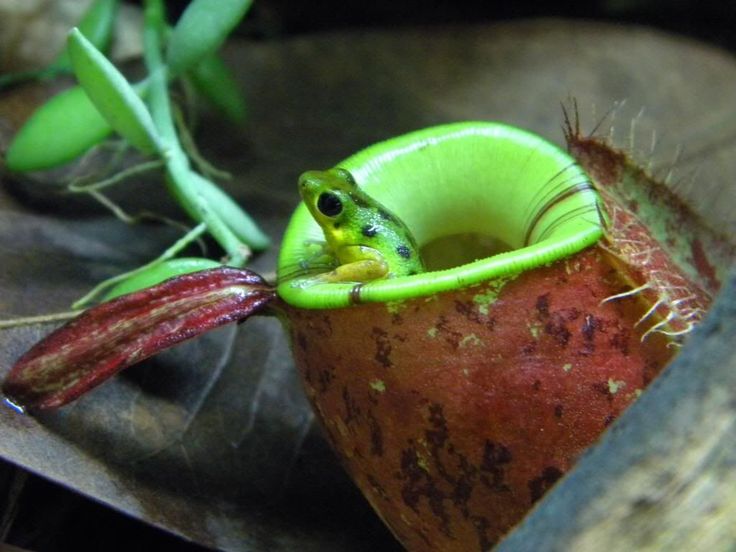
In certain ecosystems, frogs regularly inhabit pitcher plants. The interior provides a cool, moist refuge protected from larger predators. These frogs feed on insects attracted to the plant and carefully avoid the most dangerous zones.
Their presence benefits the plant. Waste produced by the frogs dissolves into the pitcher fluid, providing nitrogen without the need for digestion. The frog gains shelter. The plant gains nutrients. Neither is exploiting the other entirely.
Other organisms—including mosquito larvae, mites, spiders, and specialized bacteria—live inside carnivorous traps as part of stable micro-ecosystems. Over time, these communities become integral to how the plant processes nutrients. A carnivorous plant is often less a solitary predator and more a miniature ecosystem.
Environmental Conditions That Increase Animal Captures
Vertebrate captures tend to increase under specific environmental stresses.
During droughts, animals search aggressively for moisture and shade. Pitcher plants, filled with liquid and sheltered from heat, become attractive resting points. During periods of heavy rain, slippery surfaces and reduced visibility increase the likelihood of accidental falls.
These patterns show that animal trapping is not driven by plant behavior, but by environmental pressure. The plant simply becomes more dangerous when conditions push animals toward risky decisions.
Why Carnivorous Plants Never Became True Predators
If carnivorous plants can trap animals, a natural question follows: why didn’t evolution push them further?
The answer lies in limitation. Plants lack mobility, rapid response, and high-energy intake. They cannot pursue prey, choose targets, or recover quickly from damage. Every trap failure costs time and resources.
Any evolutionary shift toward larger prey would increase risk faster than reward. Traits that encouraged vertebrate predation would be selected against almost immediately. What we see today is not an incomplete path, but a stable endpoint.
Carnivorous plants sit exactly where they need to sit—efficient enough to survive, restrained enough not to destroy themselves.
Why the Idea of “Man-Eating Plants” Persists
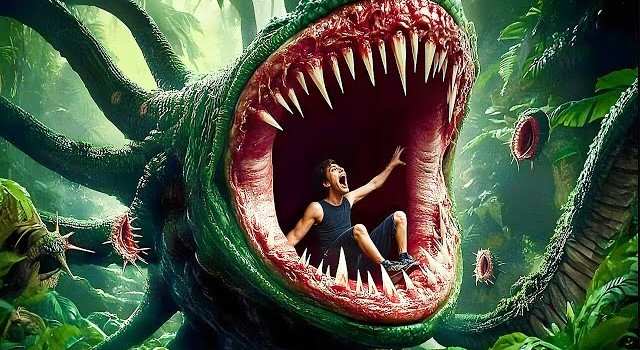
Humans are deeply unsettled by role reversal. Plants are expected to be passive. Animals are expected to act. When that expectation breaks, even briefly, the story grows.
Rare events become headlines. Accidents are framed as intention. Biological nuance is replaced by exaggeration. The idea of plants that eat animals taps into a fear of losing control to something we consider inert.
In reality, no carnivorous plant poses a threat to humans or large animals. The limits are firm, enforced by energy, physics, and biology.
What Carnivorous Plants Really Teach Us
Carnivorous plants are not monsters. They are survivors shaped by scarcity.
They demonstrate that predation does not require intelligence or aggression. It can emerge from structure, patience, and time. They also show that evolution does not chase drama. It settles for what works well enough.
When an animal is trapped by a plant, it is not evidence of cruelty or intent. It is evidence that nature operates without regard for our categories or comfort.
Plants do not need to hunt to be dangerous. Sometimes, waiting is enough.