

For many people, snakes exist only as symbols of fear, danger, or myth. Yet behind that reputation lies a far quieter and more troubling reality: many snake species are disappearing, often without notice. While large predators and charismatic animals dominate conservation headlines, snakes tend to vanish in silence, their decline masked by secrecy, camouflage, and the simple fact that most people rarely see them in the wild to begin with.
Across deserts, rainforests, wetlands, and isolated islands, snakes are facing mounting pressure from almost every direction. Expanding agriculture, deforestation, road construction, pollution, climate change, and invasive species are steadily erasing the habitats these reptiles depend on. In some regions, fear-driven killing by humans has further accelerated population collapse. Ironically, some of the world’s rarest snakes are not rare because they are weak or poorly adapted, but because their survival strategies rely on highly specific environments that no longer exist in abundance.
Rarity among snakes can take many forms. Some species are confined to a single island or forest fragment. Others live underground, underwater, or high in the canopy, making them almost invisible to casual observers. A few are so specialized in diet or behavior that even small ecological changes can push them toward extinction. What unites them is not just scarcity, but mystery. Many of these snakes are poorly studied, rarely photographed, and known only from a handful of encounters recorded by scientists.
Adding to their intrigue is the fact that rare snakes are often among the strangest creatures evolution has produced. Unusual horns, tentacles, exaggerated snouts, armor-like scales, and impossible camouflage are not oddities for show, but finely tuned adaptations shaped by millions of years of survival in extreme niches. These features help them hunt, hide, sense the world, or avoid predators—but they also make these snakes unforgettable once seen.
The following list explores some of the rarest and most unusual snakes known today. Each one represents a fragile thread in the planet’s ecological fabric, a reminder that biodiversity is not just about numbers, but about forms, functions, and evolutionary stories that may disappear forever if left unprotected.
A selection of the strangest rare snakes on Earth
10- Saharan horned viper
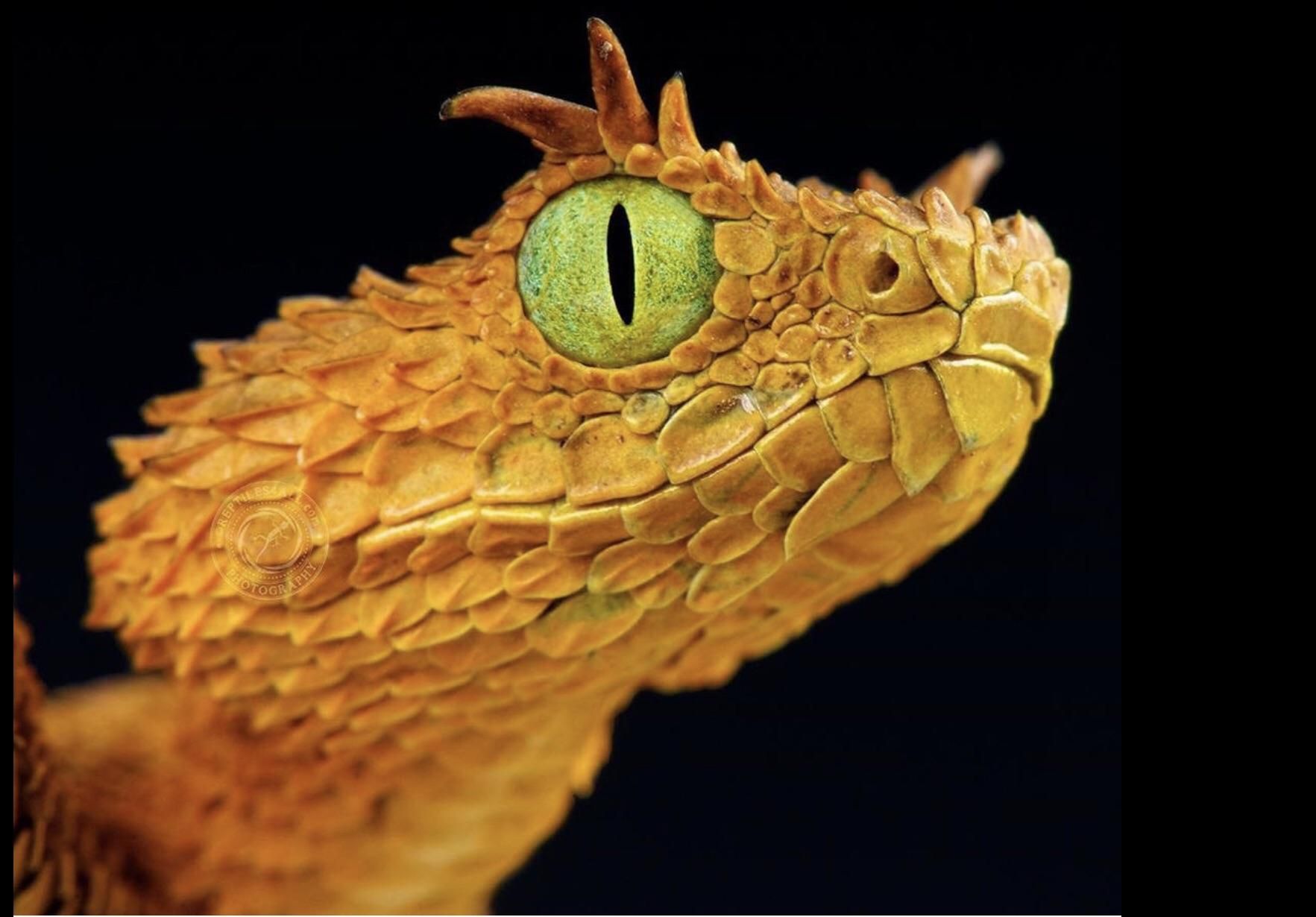
The Saharan horned viper is one of the most visually intimidating snakes found in desert environments. Its most distinctive feature is the pair of horn-like projections above its eyes, each formed from a single hardened scale. These horns give the snake an almost mythical appearance and have made it a subject of fascination for centuries.
Living in the harsh sands of North Africa and the Middle East, this viper is perfectly adapted to desert life. It spends much of its time partially buried beneath sand, waiting motionless for prey to wander within striking distance. The horns may help break up the outline of the head or protect the eyes from drifting sand.
Due to habitat disturbance and human encroachment, sightings of the Saharan horned viper have become increasingly uncommon in parts of its range, placing it among the rarer desert-dwelling snakes today.
9- Malagasy leaf-nosed snake
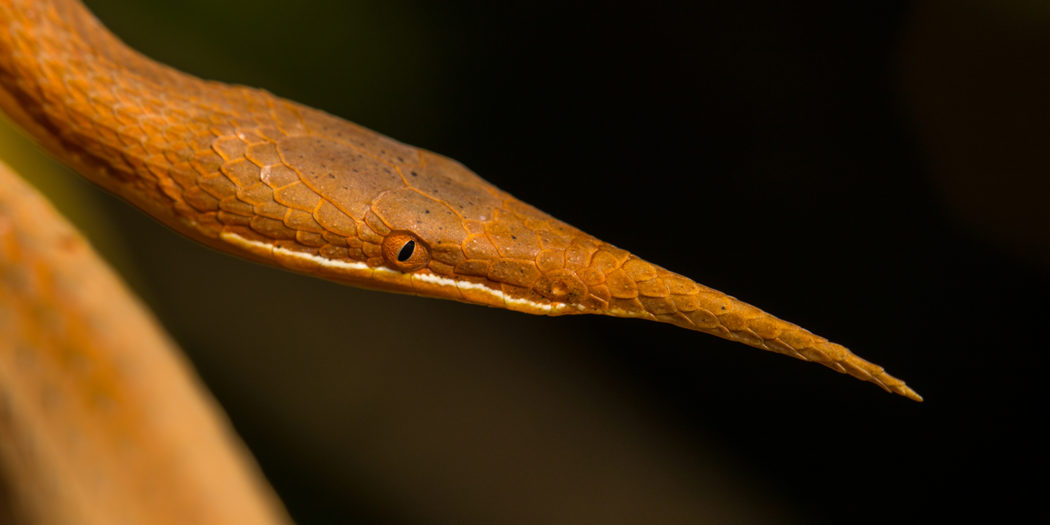
The Malagasy leaf-nosed snake is a master of camouflage, found only on the island of Madagascar. Its elongated, leaf-shaped snout allows it to blend seamlessly into foliage, making it nearly invisible among branches and leaves.
This species shows extreme sexual dimorphism. Males possess a long, spear-like nose, while females have a shorter, flattened structure resembling a leaf. Both forms serve the same purpose: deception. By mimicking plant shapes, the snake avoids predators and ambushes prey with remarkable efficiency.
Deforestation across Madagascar has severely reduced suitable habitat for this species. As forests disappear, so too does one of nature’s most convincing examples of evolutionary mimicry.
8- Long-nosed whip snake
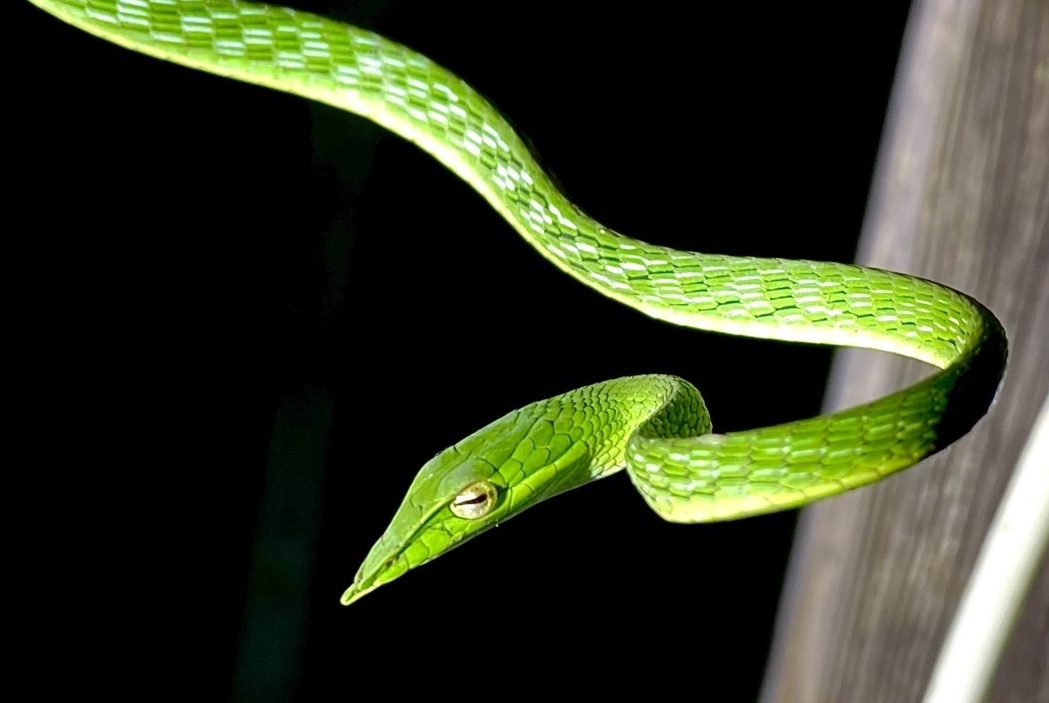
The long-nosed whip snake is instantly recognizable due to its elongated snout and vivid green coloration. These features allow it to disappear almost completely within dense vegetation, where it spends much of its life hunting small reptiles and amphibians.
The extended nose is believed to play a role in both camouflage and foraging, helping the snake probe into tight spaces among leaves and branches. Its slender body and quick movements make it an agile climber, perfectly suited for life in shrubs and trees.
Although not widely known, habitat loss has made encounters with this species increasingly rare in certain regions, earning it a place on this list.
7- Tentacled snake
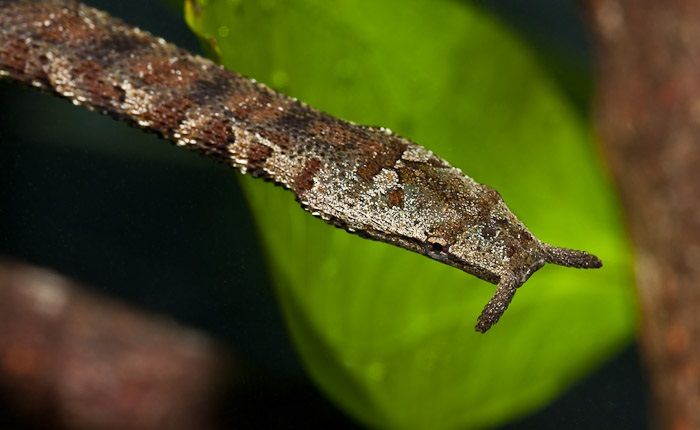
The tentacled snake is one of the strangest-looking snakes in the world, native to freshwater habitats in South Asia. At first glance, it resembles a smooth, elongated creature with two small tentacles protruding from its upper jaw.
These tentacles are not decorative; they are sensory organs that help the snake detect vibrations in the water. Unlike most snakes, the tentacled snake relies heavily on ambush tactics, remaining completely still until fish swim close enough to strike.
Its highly specialized hunting method and limited habitat range make it uncommon, and changes to wetland ecosystems threaten its long-term survival.
6- Elephant trunk snake
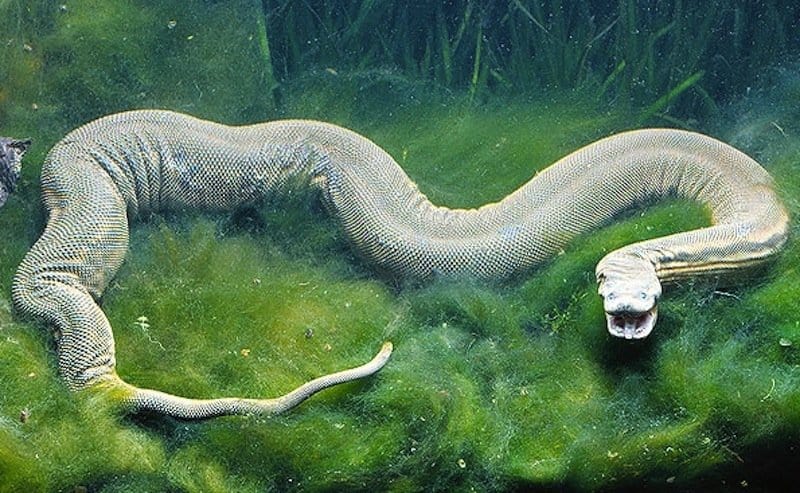
The elephant trunk snake draws attention immediately due to its loose, wrinkled skin, which resembles the texture of an elephant’s hide. This unusual appearance is not a deformity, but a useful adaptation for its aquatic lifestyle.
Found in muddy rivers and swamps of Southeast Asia, this non-venomous snake uses its baggy skin to grip slippery prey such as fish. The extra folds also help it anchor itself against strong currents while hunting underwater.
Pollution and the destruction of freshwater habitats have caused population declines, making this once-overlooked species increasingly rare in the wild.
5- Long-nosed viper
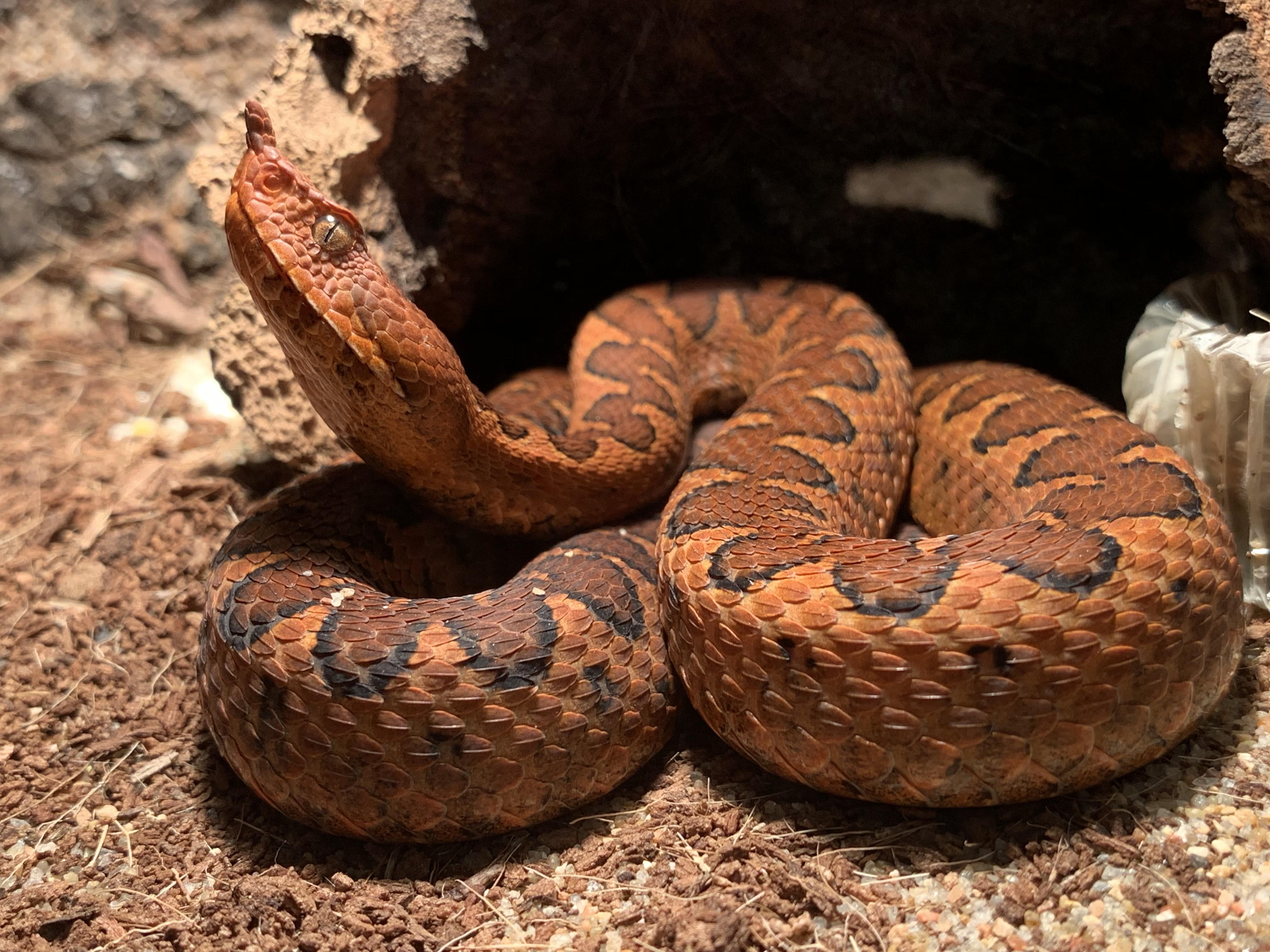
The long-nosed viper is distinguished by a soft, flexible appendage on the tip of its snout, formed by a cluster of modified scales. This extension can measure up to 0.20 inches and gives the snake a distinctive profile.
Native to parts of Europe and western Asia, this viper inhabits rocky hillsides and forested areas. The nose structure may help break up the shape of the head among leaves and stones, aiding in camouflage.
Although not among the most venomous vipers, its limited distribution and declining habitat have contributed to its growing rarity.
4- Tiger keelback snake
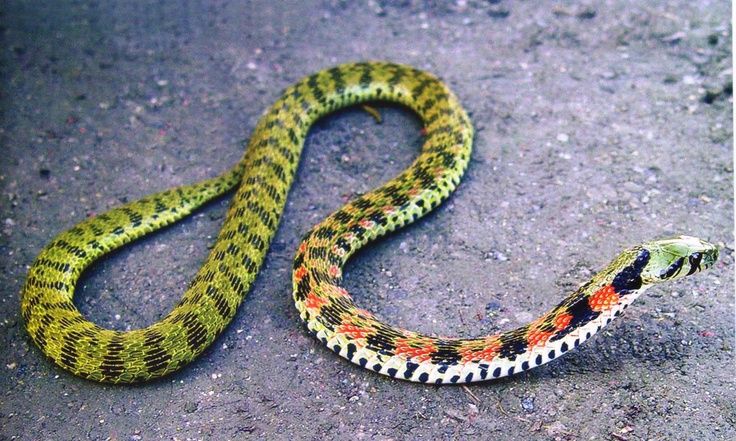
The tiger keelback snake earns its name from its striking coloration. Its green and black body is marked with orange and black spots along the back, closely resembling the patterning of a tiger’s coat.
This semi-aquatic species is often found near rivers, ponds, and wetlands, where it feeds on amphibians and small fish. Interestingly, the tiger keelback is known for its unique ability to store toxins from its prey, making it poisonous to predators despite being non-venomous.
Wetland destruction and water pollution have reduced suitable environments for this snake, making it increasingly difficult to find in the wild.
3- Dragon snake
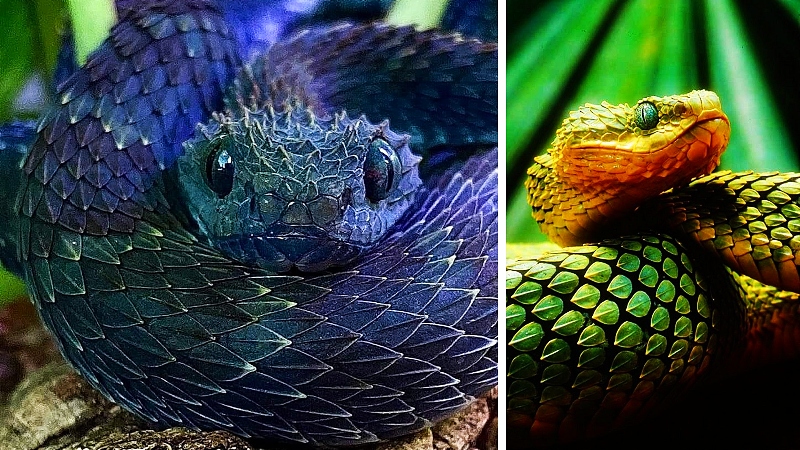
The dragon snake looks more like a prehistoric creature than a modern reptile. Its dark coloration and heavily keeled scales give it a rugged, armored appearance reminiscent of a crocodile or mythical dragon.
Native to Southeast Asia, this secretive species spends much of its time underground or hidden beneath leaf litter. Its stiff scales may provide protection against predators and abrasive environments.
Very little is known about the dragon snake’s behavior, reproduction, or population size, largely because it is so rarely encountered. This lack of data adds to its mystery and highlights how little we still know about some of Earth’s rarest reptiles.
2- Rhinoceros viper
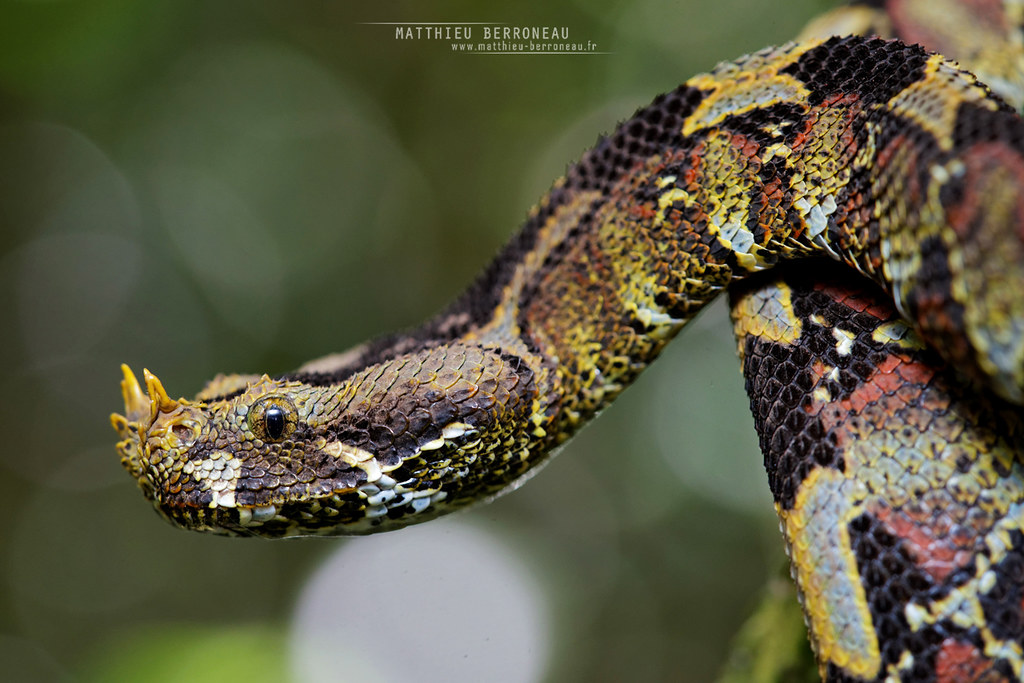
The rhinoceros viper is one of the most visually spectacular snakes in Africa. It possesses a prominent horn on its snout, formed by two or three large scales, often accompanied by smaller horn-like projections.
Its body is covered in bold geometric patterns of blue, green, yellow, and black, making it one of the most colorful vipers in the world. This coloration provides camouflage among fallen leaves and forest debris.
Despite its fearsome appearance, habitat loss and collection for the exotic pet trade have reduced wild populations, making sightings increasingly rare.
1- Blunthead tree snake
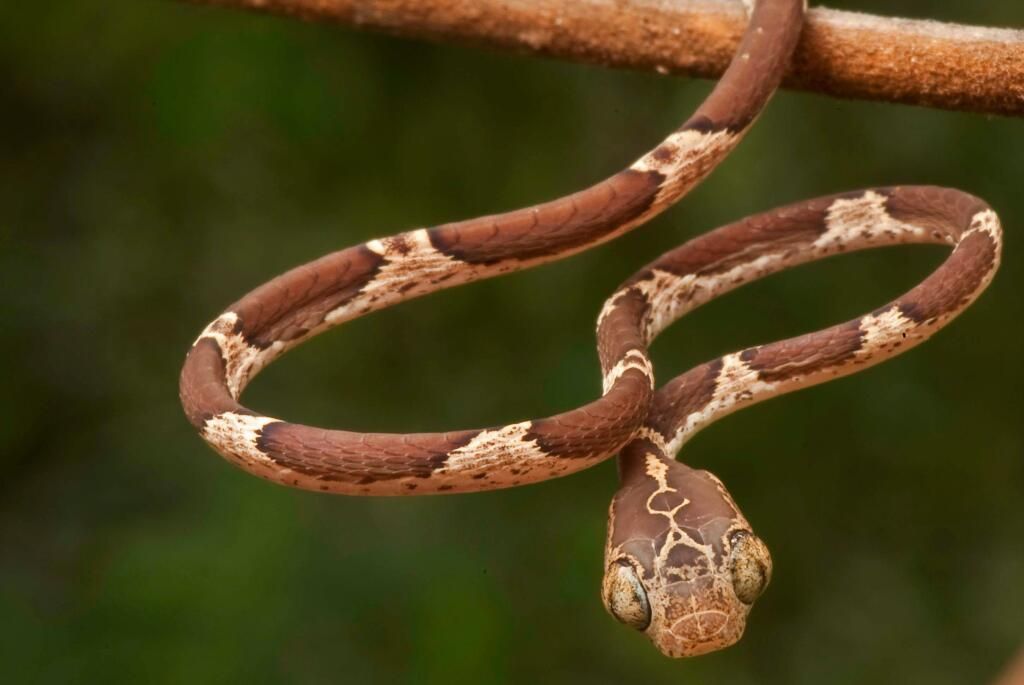
The blunthead tree snake stands out due to its slender body, unusually wide head, and exceptionally large eyes. These oversized eyes give it an almost startled expression, as if they are being pushed outward from the skull.
This arboreal species spends most of its life in trees, relying on keen vision to hunt at night. Its flattened head helps it navigate narrow branches, while its eye size enhances low-light vision.
Restricted habitat and limited geographic range have made the blunthead tree snake one of the rarest snakes on this list, and one of the most visually unforgettable.
These rare snakes are living proof that evolution can produce forms far stranger than fiction. As their habitats continue to shrink, protecting these species means preserving not only biodiversity, but also some of the most remarkable biological designs nature has ever created.