
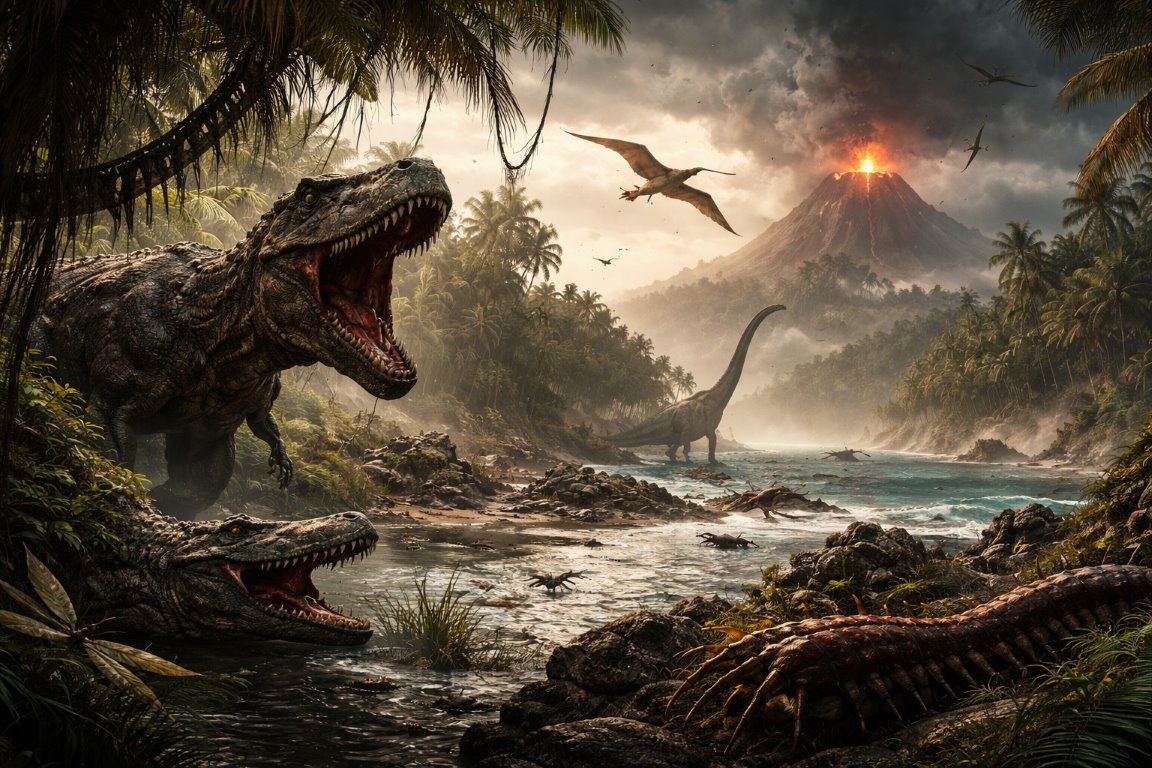

It’s easy to romanticize prehistoric Earth. Towering dinosaurs roaming lush jungles. Giant dragonflies gliding through humid air. Vast oceans filled with strange marine creatures. But behind that cinematic image lies a much harser reality.
For most of Earth’s history, survival was brutally unstable.
The planet’s climate swung between extremes. Oxygen levels surged and collapsed. Entire ecosystems vanished in geological moments. Volcanoes erupted on continental scales. Asteroids struck without warning. Oceans turned toxic. Ice swallowed continents.
Prehistoric Earth wasn’t a balanced paradise waiting for humans to arrive. It was volatile, unpredictable, and often hostile to the very life trying to adapt to it.
Let’s step back through deep time and look at why simply existing in prehistoric eras could be a constant battle.
The Oxygen Problem — Too Much or Too Little
Today, Earth’s atmosphere contains about 21 percent oxygen. That balance feels normal to us because our bodies evolved within it.
But prehistoric oxygen levels were anything but stable.
During the Carboniferous period, oxygen levels may have risen above 30 percent. That sounds beneficial, but high oxygen concentrations increase flammability. Forest fires would have ignited more easily and burned more intensely. Lightning strikes could trigger enormous infernos across swampy landscapes.
High oxygen also allowed arthropods like Meganeura to grow to unusual sizes. But ecosystems built on such atmospheric conditions were fragile. When oxygen levels later declined, many species could not cope.
In other periods, oxygen dropped significantly. Lower oxygen makes breathing harder, reduces energy efficiency, and stresses large animals. Entire evolutionary lineages struggled during these shifts.
Life wasn’t adapting to a stable atmosphere. It was adjusting to a moving target.
Mass Extinctions — Reset Buttons of Catastrophe
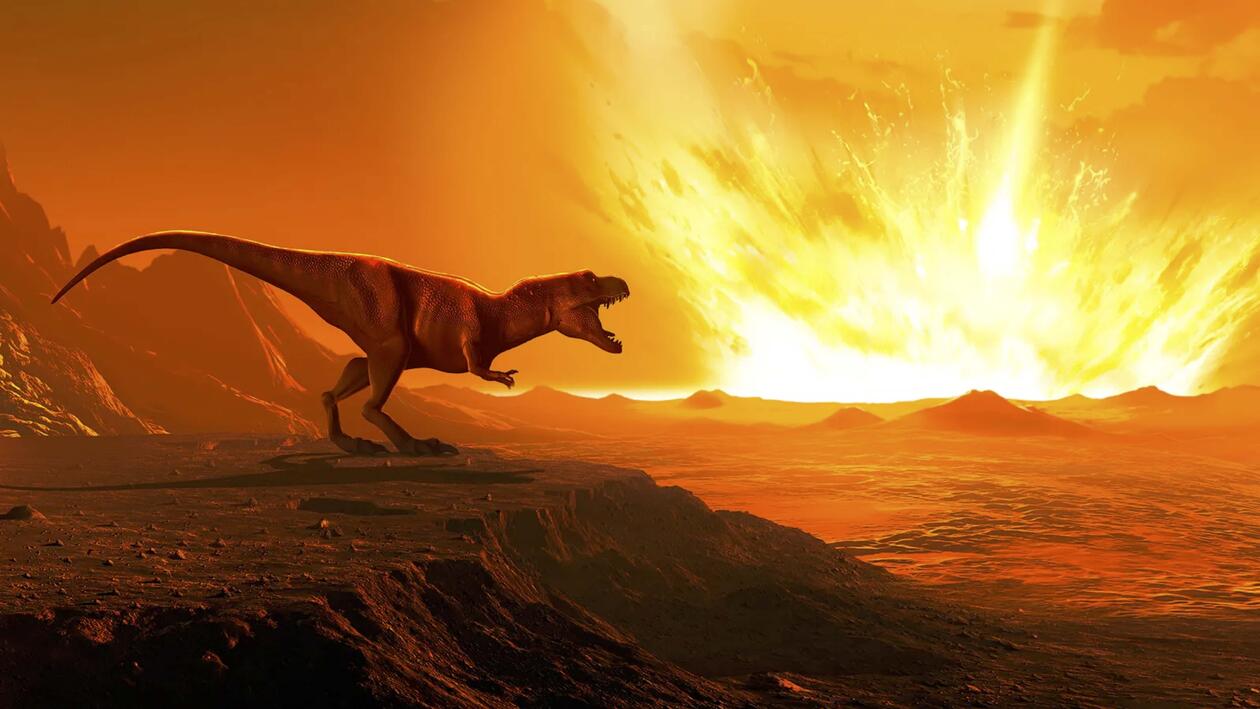
Earth has experienced at least five major mass extinction events. These weren’t small downturns. They were biological collapses.
The most severe was the Permian–Triassic extinction, often called “The Great Dying.” Up to 90 percent of marine species and around 70 percent of terrestrial vertebrate species disappeared.
What caused it? Massive volcanic eruptions in Siberia likely released enormous amounts of carbon dioxide and methane. Oceans became acidic and depleted of oxygen. Temperatures spiked dramatically.
Imagine living in a world where ecosystems unravel within a few thousand years — a blink in geological terms.
Later, the Cretaceous–Paleogene extinction ended the reign of non-avian dinosaurs when an asteroid impact triggered global fires, darkness, and climate disruption.
For life on prehistoric Earth, survival was never guaranteed long-term. Dominance could vanish overnight.
Volcanic Fury — Continents on Fire
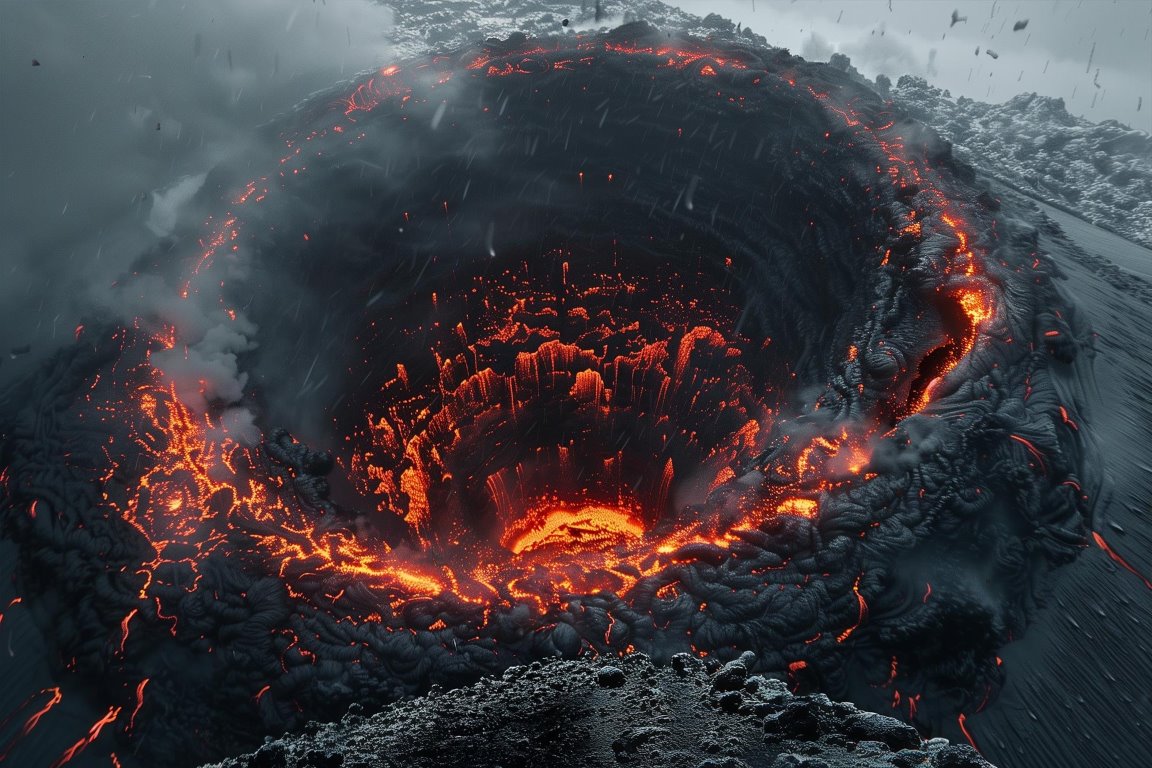
Large igneous provinces, such as the Siberian Traps and the Deccan Traps, represent some of the most extreme volcanic events in Earth’s history.
These weren’t isolated eruptions. They were prolonged outpourings of lava covering vast areas — sometimes lasting hundreds of thousands of years.
Volcanic gases released during these events altered atmospheric chemistry. Carbon dioxide increased global temperatures. Sulfur compounds caused acid rain. Ash blocked sunlight.
Ecosystems already under pressure from climate shifts would have faced cascading failures.
Plants die. Herbivores starve. Predators collapse.
Volcanism doesn’t just reshape landscapes. It rewrites biological history.
Toxic Oceans and Dead Zones
Prehistoric oceans were not always blue and life-sustaining. During certain periods, especially around mass extinction boundaries, oceans became anoxic — depleted of oxygen.
When oxygen disappears from water, marine life suffocates.
In some cases, hydrogen sulfide gas may have built up in deep waters, poisoning ecosystems. There is evidence suggesting that such toxic conditions contributed to widespread marine die-offs.
Marine reptiles, early fish, invertebrates — entire food webs — could collapse from changes invisible to the naked eye.
Life in the sea was not simply threatened by predators. It was threatened by chemistry.
Climate Extremes — From Ice to Inferno
Prehistoric Earth swung between greenhouse and icehouse states.
During certain greenhouse phases, global temperatures were much warmer than today. Polar regions had forests. Sea levels rose dramatically, flooding coastal habitats.
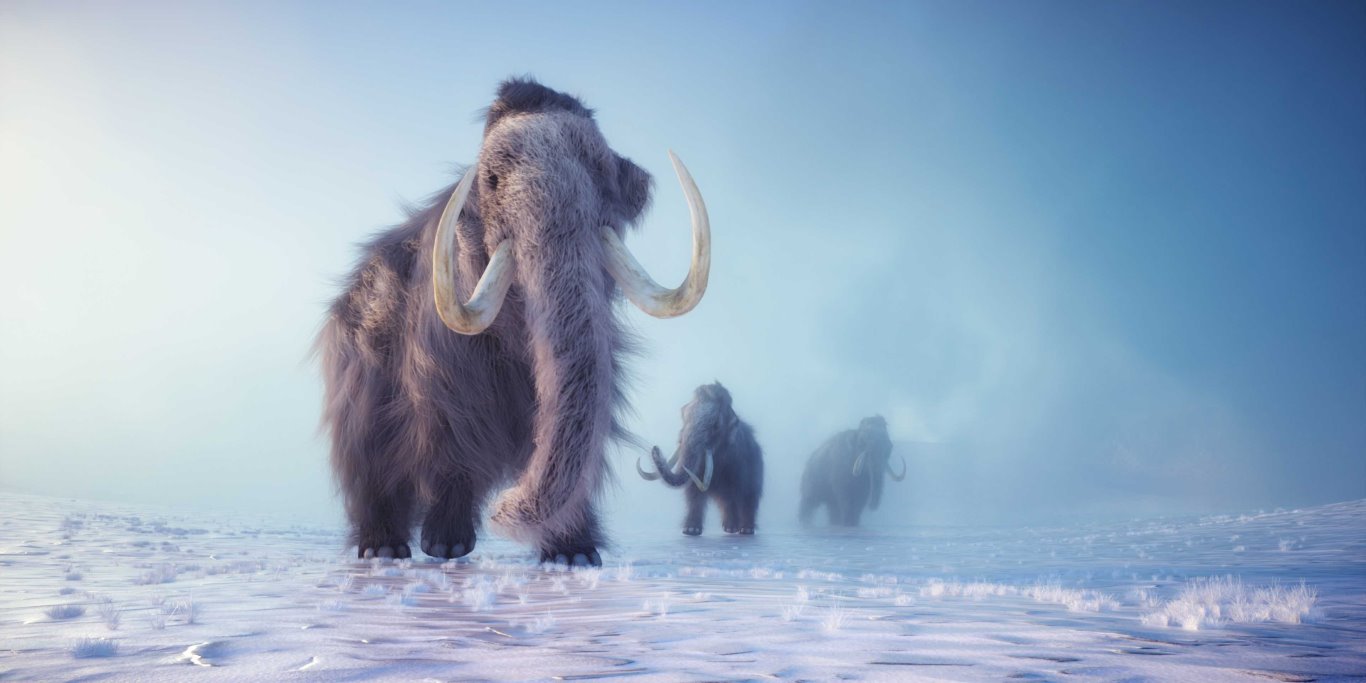
In contrast, ice ages locked large portions of continents under glaciers. Habitats shrank. Migration routes shifted.
Animals had to adapt to slow but relentless environmental transformation. Some did. Many did not.
Climate instability creates evolutionary pressure, but it also creates extinction.
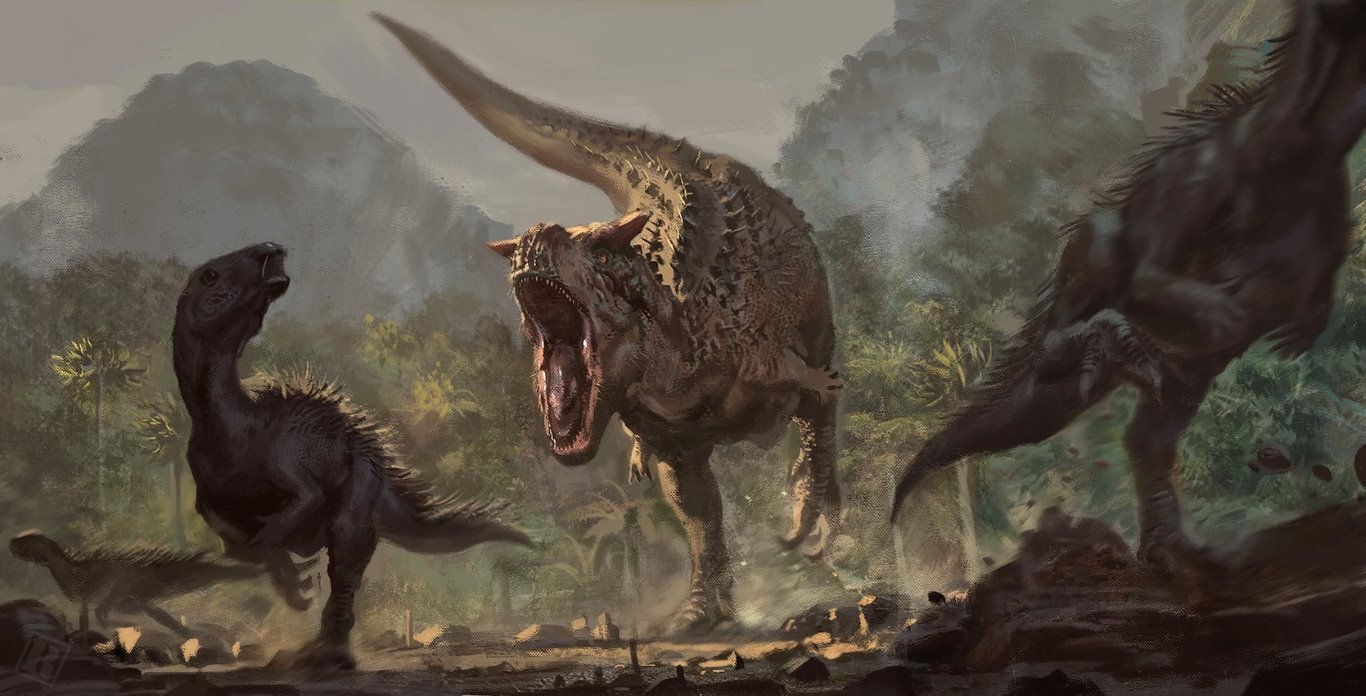
Predation Pressure — No Safe Middle Ground
Even when the climate stabilized temporarily, life still faced constant biological pressure.
Predator-prey arms races intensified over millions of years. Shells thickened. Jaws strengthened. Speed increased. Camouflage improved.
If you were a small herbivore in the Jurassic, you had to worry about large theropods. If you were a fish in Devonian seas, armored predators like Dunkleosteus patrolled nearby.
There was little room for weakness.
In many prehistoric ecosystems, mid-sized animals often faced the highest pressure — large enough to attract predators, but not large enough to deter them.
Survival required constant vigilance.
Disease and Parasites — The Invisible Threat
Predators, volcanoes, and asteroids get most of the attention. But one of the most persistent threats to prehistoric life was far less dramatic.
Parasites and pathogens.
Fossil evidence shows signs of bone infections, parasitic infestations, and healed lesions in many prehistoric animals. Some dinosaurs exhibit abnormal bone growth consistent with chronic disease. Marine reptiles show bite wounds that later became infected. Even early mammals bear skeletal signs of stress and illness.
Unlike a predator, disease doesn’t announce itself. It spreads quietly, often exploiting animals already weakened by environmental stress.
In swampy, warm climates — common during many prehistoric greenhouse periods — parasites would have thrived. Standing water breeds microorganisms. Dense populations increase transmission rates.
When ecosystems are already unstable, disease can push vulnerable species over the edge.
Extinction is rarely caused by one factor alone. Often, it’s the accumulation of pressures — and disease is one of the oldest.
Shifting Continents — Habitats in Motion
Prehistoric Earth did not have stable geography.
The supercontinent Pangaea assembled and later split apart. As landmasses drifted, coastlines changed, mountain ranges rose, oceans opened, and climates shifted dramatically.
Continental movement reshaped rainfall patterns and wind systems. Forests became deserts. Inland seas formed and vanished. Migration routes were cut off.
Animals adapted to one region could suddenly find themselves isolated. Genetic pools shrank. Competition intensified.
When continents separate, populations fragment. Fragmentation can drive evolution — but it can also accelerate extinction.
The Earth itself was rearranging the playing field.
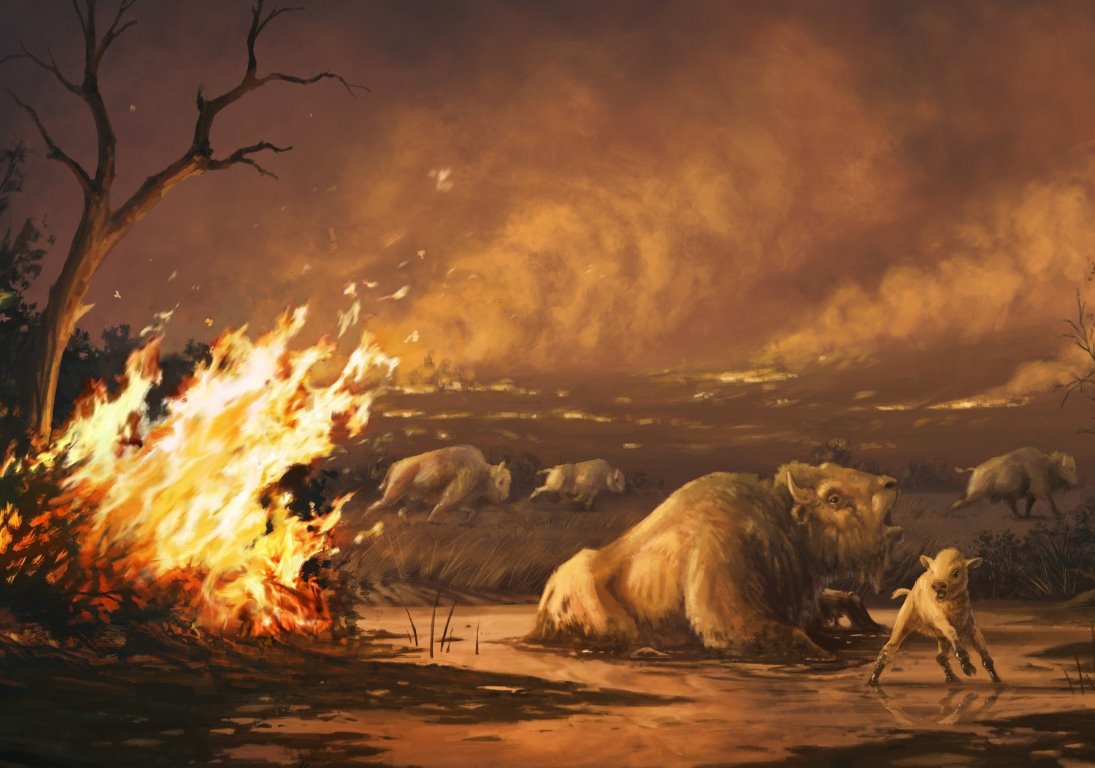
Firestorms and Impact Winters
The asteroid that ended the age of non-avian dinosaurs is the most famous example of planetary catastrophe. But impact events have occurred many times throughout Earth’s history.
When a large asteroid strikes, it doesn’t just create a crater. It ejects debris into the atmosphere. Dust blocks sunlight. Temperatures drop rapidly. Photosynthesis declines.
Plants die first. Herbivores follow. Predators soon after.
There is also evidence that massive impacts trigger global firestorms. Re-entering debris heats the atmosphere, igniting forests across continents.
In such moments, survival depends less on strength and more on luck — burrowing habits, aquatic refuge, small body size.
Dominance means nothing when sunlight disappears.
Evolution’s Brutal Pace
Perhaps the most unsettling aspect of prehistoric Earth was the speed at which change could occur.
On geological timescales, thousands of years are barely measurable. Yet entire species vanished within such windows.
If you were a dominant predator one million years ago, that offered no guarantee of persistence.
Evolution rewards adaptability, not supremacy.
Small, generalist species often outlasted massive specialists. Creatures that could eat varied diets, tolerate temperature shifts, or reproduce quickly had advantages over giants that required stable ecosystems.
In that sense, prehistoric Earth was not simply violent — it was unforgiving to rigidity.
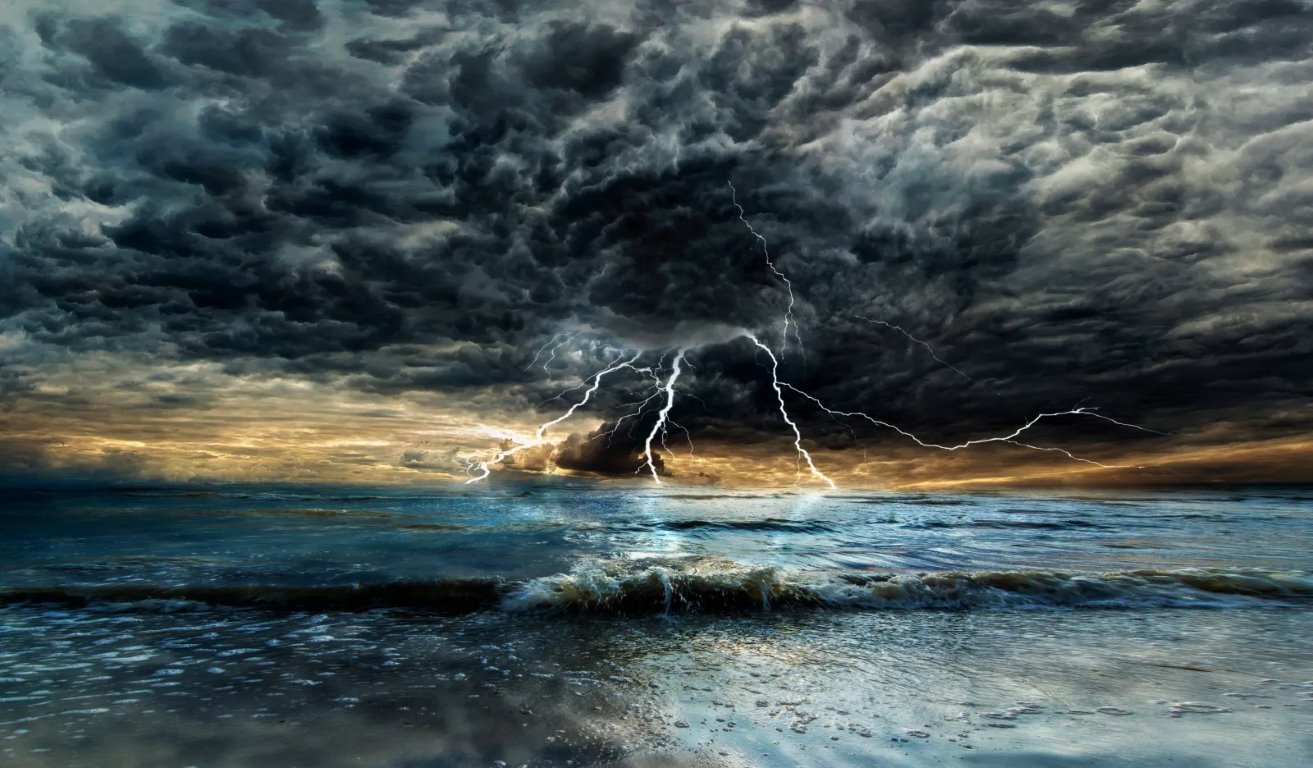
No True Stability
Modern humans often imagine Earth as naturally balanced. But balance is a temporary illusion.
For most of deep time, the planet oscillated between states. Warm and cold. Oxygen-rich and oxygen-poor. Toxic and breathable. Fragmented and unified.
Life persisted, but rarely comfortably.
If we could step into many prehistoric eras, we might find breathtaking landscapes — but also unpredictable weather, unfamiliar pathogens, unstable terrain, and ecological systems under constant tension.
It wasn’t just predators that made prehistoric Earth dangerous.
It was the planet itself.
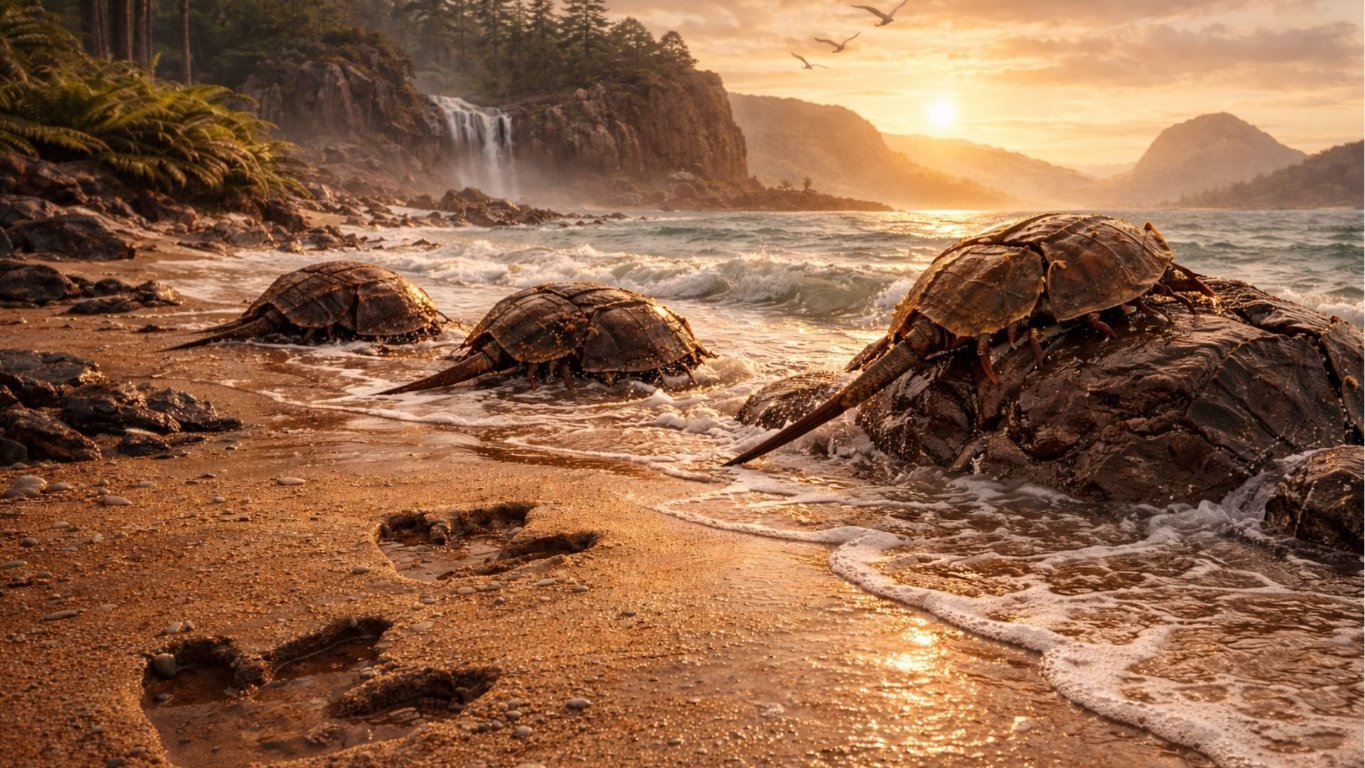
Why Life Endured Anyway
For all its violence and instability, prehistoric Earth never succeeded in doing one thing: eliminating life completely.
That may be the most extraordinary part of the story.
Mass extinctions erased dominant species. Volcanic eruptions poisoned air and oceans. Asteroids blocked sunlight and froze the planet’s surface. Oxygen levels fluctuated. Continents collided and separated. Entire ecosystems collapsed. And yet, something always remained.
The survivors were rarely the biggest or the strongest. They were often small, adaptable, and unremarkable at first glance. Burrowing animals shielded from firestorms. Aquatic species protected from temperature extremes. Generalists capable of eating almost anything. Organisms with rapid reproductive cycles that allowed quick recovery after population crashes.
Resilience, not dominance, became the defining trait.
After the Permian–Triassic extinction, when most complex life nearly vanished, ecosystems did not instantly rebound. Recovery took millions of years. But slowly, niches reopened. New predator-prey dynamics formed. Reptiles diversified. Eventually, dinosaurs emerged and filled ecological roles left vacant.
Then, after the asteroid impact that ended the Cretaceous, the same pattern repeated. Non-avian dinosaurs disappeared, but birds survived. Small mammals endured in sheltered environments. Within a few million years, mammals began expanding into ecological spaces that had been unavailable for over 150 million years.
Extinction events didn’t just destroy life. They reshaped opportunity.
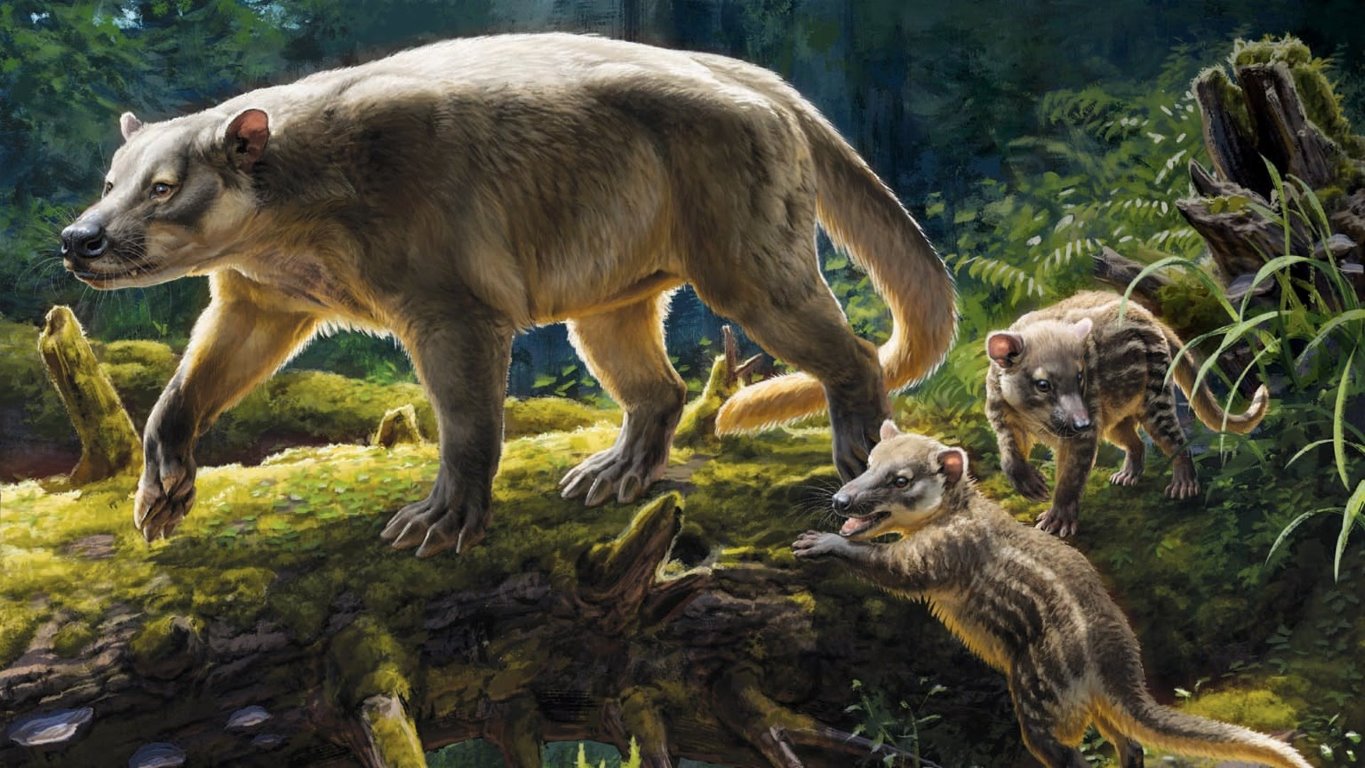
Prehistoric Earth functioned like a series of brutal evolutionary filters. Each catastrophe removed species that were too specialized, too dependent on stable conditions, or too slow to adapt. Those that remained were, by definition, capable of enduring stress. Over time, this process produced increasingly flexible and innovative life forms.
There is also a deeper truth here: life does not require comfort. It requires persistence. Microorganisms survived in deep ocean vents, beneath ice sheets, within sediments, and inside rock pores. Plants recolonized burned landscapes. Marine plankton repopulated oxygenated waters. Ecosystems reassembled piece by piece.
The nightmare conditions did not prevent evolution. They accelerated it.
Pressure forced adaptation. Isolation triggered diversification. Environmental instability drove experimentation at a biological level. Feathers evolved. Flight emerged. Warm-blooded metabolism developed. Complex brains expanded.
Prehistoric Earth was harsh, but it was also creative.
Life endured not because the planet became safer, but because living systems learned to navigate danger. Flexibility replaced rigidity. Small size often outperformed gigantism. Mobility outperformed immobility. Diversity became insurance against collapse.
In the end, the story of prehistoric Earth is not just one of catastrophe. It is one of persistence under pressure.
The same forces that made ancient Earth a nightmare also forged the resilience that defines life today.