
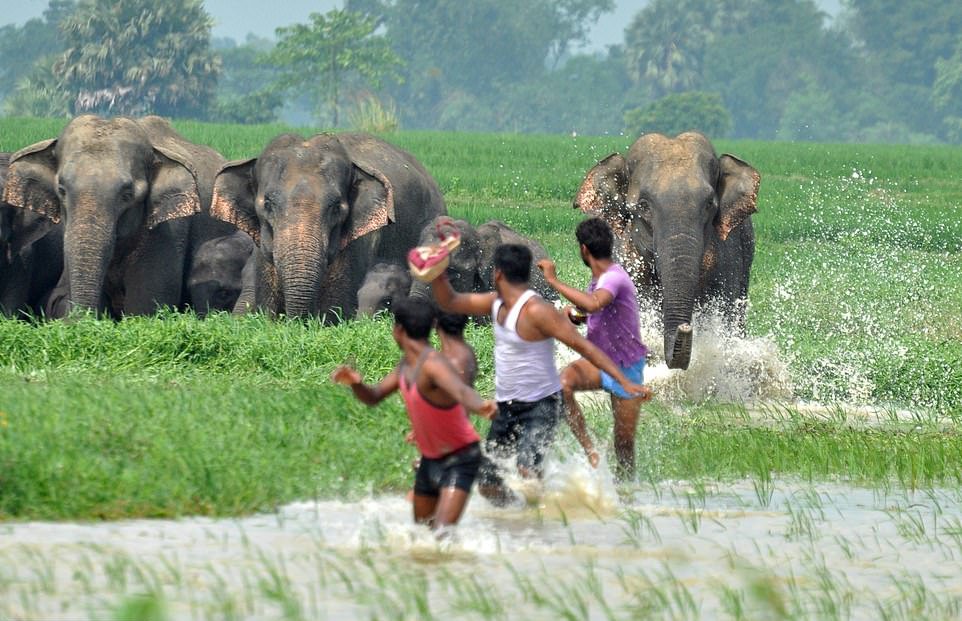

When news breaks about an animal attack, the language is almost always the same. “It came out of nowhere.” “There was no reason.” “The animal just snapped.” We instinctively search for motive the way we would in a human crime. Was it hungry? Was it provoked? Was it angry? And when none of those explanations seem obvious, we label the event as senseless.
But the idea of killing “without reason” is deeply human.
Animals do not think in narratives. They do not construct moral arguments before acting. They do not pause to weigh fairness, restraint, or consequences in the way humans do. Their behavior is shaped by millions of years of evolutionary wiring — reflexes, instincts, hormonal surges, territory, fear responses, and environmental pressures. What appears irrational from the outside is often the product of biological programming that prioritizes survival over nuance.
That does not make animal attacks less tragic. It makes them less personal.
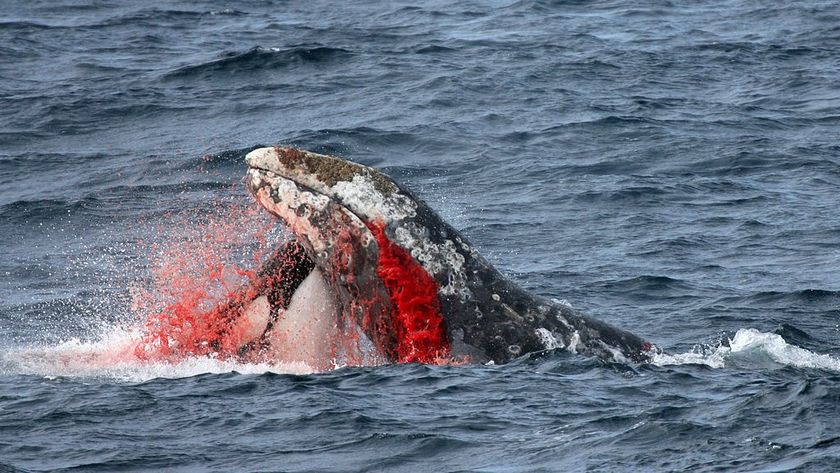
In many documented cases, attacks that seemed completely unprovoked later revealed hidden triggers: subtle territorial cues, food competition, neurological disease, mistaken identity, environmental stress, or learned behavior. Sometimes the “reason” exists in signals humans simply cannot perceive — scent trails, posture, eye contact, or vibrations.
There are also moments when instinct overrides immediate need. A predator may kill without hunger. A territorial animal may charge without prior warning. A frightened herbivore may inflict fatal injuries while attempting to escape. These actions are not expressions of malice. They are fast, automatic survival reactions in bodies designed to react before thinking.
The real question is not why animals kill without reason. It is why humans expect them to operate by human reasoning.
To understand these events clearly, we must separate emotion from biology and myth from mechanism. Only then can we see that what feels random is often structured — just structured by a system very different from our own.
The Human Idea of “Reason”
Before examining animals, it helps to examine ourselves.
Humans tend to assign intention and moral judgment to behavior. If someone harms another person, we ask about motive: revenge, greed, anger, survival. We expect a narrative.
Animals do not build narratives. They respond to stimuli.
When a predator attacks livestock but leaves the carcass mostly untouched, people say it killed “for no reason.” In reality, the animal may have been startled mid-hunt, interrupted by noise, or practicing predatory behavior driven by instinct rather than hunger.
The concept of “reason” is human. The concept of stimulus-response is biological.
Predatory Instinct Is Not Always About Hunger
Many predators kill even when they are not starving.
Domestic cats are a common example. Well-fed house cats often hunt birds or rodents without eating them. This is not cruelty. It is instinctive predatory behavior triggered by movement.
In the wild, predators sometimes engage in surplus killing — attacking multiple prey animals during a single encounter. Wolves, foxes, and big cats have been documented killing more animals than they immediately consume.
Why?
Because in natural environments, prey is unpredictable. When opportunity appears, instinct drives action. The predator’s nervous system does not calculate future meal planning. It responds to motion, vulnerability, and opportunity.
From a human viewpoint, it appears excessive. From an evolutionary standpoint, it is opportunistic.
Territorial Defense Can Be Deadly
Many animal attacks that seem random are actually territorial responses.
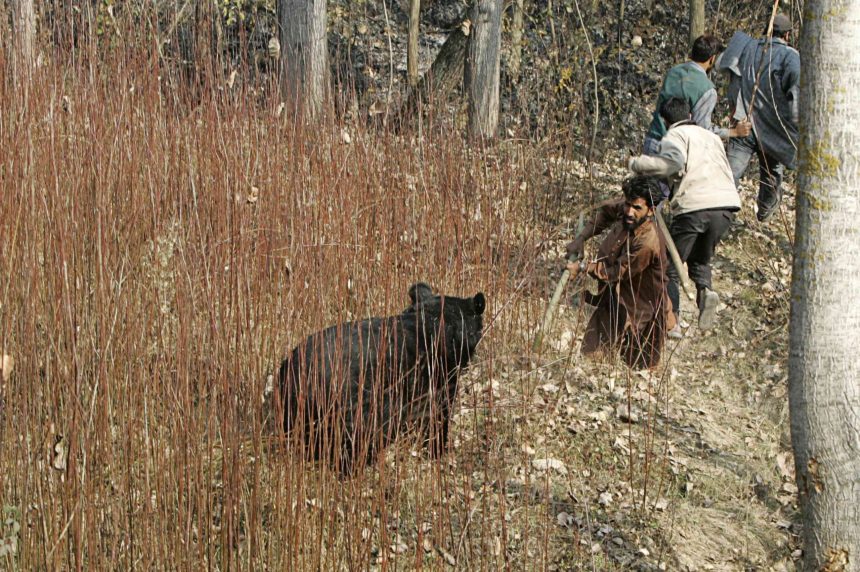
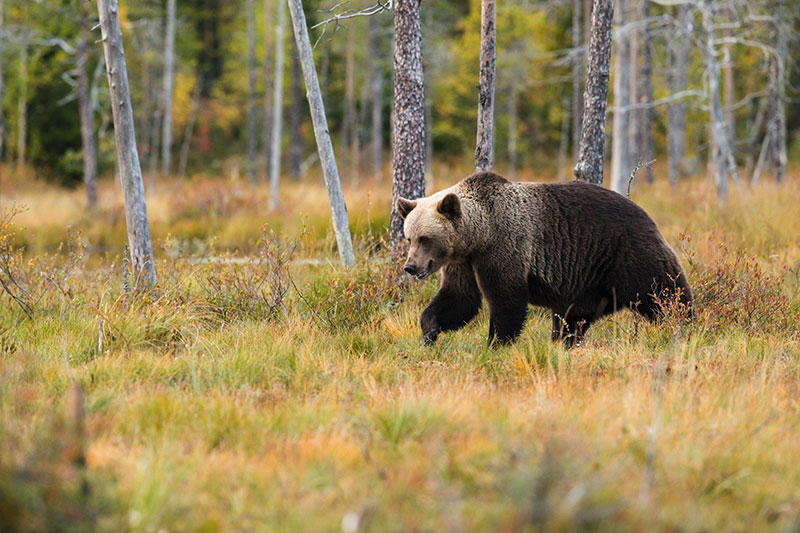
Large predators such as bears, big cats, and even herbivores like moose defend territory aggressively. When a human unknowingly enters that territory, the animal may perceive intrusion as a threat.
The animal does not differentiate between a human hiker and a rival predator. It reacts to presence.
In some cases, especially during mating season or when offspring are nearby, animals display heightened aggression. The perceived risk to offspring amplifies defensive behavior.
To the human victim, there may have been no visible warning. To the animal, there was intrusion.
Fear as a Trigger
Fear is one of the most powerful survival mechanisms in the animal kingdom.
A frightened animal may attack preemptively. Even non-predatory species can cause fatal injuries when cornered or startled.
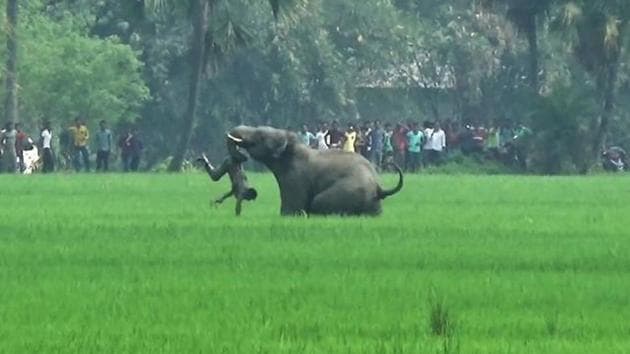
Horses can kick. Deer can gore. Elephants can charge. Many of these incidents are defensive rather than predatory.
In high-stress situations, the animal’s nervous system shifts into fight-or-flight mode. If escape is blocked, fight becomes the only option.
Humans often misinterpret such attacks as aggression when they are actually panic responses.
Neurological and Hormonal Factors
Animal behavior is influenced heavily by hormones and neurological triggers.
During mating seasons, testosterone levels rise in many species, increasing aggression. This is especially true in males competing for mates.
Rabies infection can drastically alter behavior, causing normally cautious animals to become unusually aggressive. Neurological disease can impair judgment and fear responses.
In rare cases, injuries or brain abnormalities can alter animal temperament.
While these situations are uncommon, they demonstrate that behavior is not always stable or predictable.

When Humans Change the Environment
Many so-called “senseless” animal attacks occur in environments altered by humans.
Habitat loss pushes wildlife into closer contact with urban areas. Food scarcity caused by environmental disruption may increase predatory risk-taking. Animals that become habituated to human food sources lose fear.
A bear accustomed to scavenging from garbage bins may approach campsites more boldly. A shark attracted by fishing activity may investigate swimmers.
When boundaries blur, behavior changes.
What appears to be unprovoked aggression is sometimes ecological imbalance.
Play, Practice, and Instinct
Young predators often practice hunting behavior long before they depend on it for survival.
Cubs and juveniles may attack smaller animals in what looks like play but functions as skill development. Occasionally, such behavior can become dangerous if directed toward domestic animals or even humans.
The behavior is not driven by malice. It is rehearsal.
Predatory behavior is hardwired. It activates under specific triggers — movement, vulnerability, sound.
When those triggers occur in unexpected contexts, outcomes can be tragic.
Real-World Cases That Seemed “Unprovoked”
Throughout history, certain animal attacks have been labeled as random or irrational because observers could not immediately identify a trigger. But later investigation often revealed context that was not obvious at the time.
In some well-documented cases of tiger attacks in India and Bangladesh, the animals had sustained injuries that made normal hunting difficult. When prey becomes harder to catch, weakened predators may shift targets. Humans, unfortunately, are slower and less vigilant than wild prey.
Similarly, certain shark attacks once described as “feeding frenzies” were later linked to environmental factors such as murky water, baitfish presence, or mistaken identity. From below, a swimmer silhouetted against the surface can resemble natural prey.
What appears sudden from the victim’s perspective may have involved a chain of subtle environmental signals.
When Predators Change Behavior
Occasionally, predators that have never previously targeted humans begin doing so. These events are often interpreted as deliberate aggression. However, several factors can shift animal behavior patterns:
-
Loss of natural prey due to overhunting
-
Habitat encroachment
-
Injury or aging
-
Learned behavior after successful predation
In rare cases, once an animal successfully preys on a human, it may repeat the behavior. This is not because of moral corruption — it is because of reinforcement. In the wild, successful strategies are repeated.
However, such cases remain statistically rare compared to the total number of predator-human interactions globally.
Surplus Killing: Why Some Animals Kill More Than They Eat
One of the strongest examples cited as “killing without reason” is surplus killing. Foxes entering a henhouse may kill many chickens in one event but consume only one.
This behavior is driven by instinctive response to rapid prey movement. In confined environments, prey cannot escape normally. The predator’s brain receives repeated trigger signals, leading to repeated attack responses.
The predator is not calculating food needs. It is responding to stimuli faster than inhibition can occur.
In the wild, such situations are uncommon. In human-managed environments, they become more visible.
The Myth of Malice
It is tempting to describe animal attacks using emotional language: vicious, evil, revenge-driven. But malice requires complex moral cognition — something humans project more than animals possess.
Predators do not seek punishment or retaliation in the way humans imagine. Even territorial animals that repeatedly attack intruders are responding to pattern recognition and perceived threat, not vengeance.
Anthropomorphism — assigning human traits to animals — often leads to misunderstanding.
The animal is not asking why. It is responding.
True Randomness vs. Limited Understanding
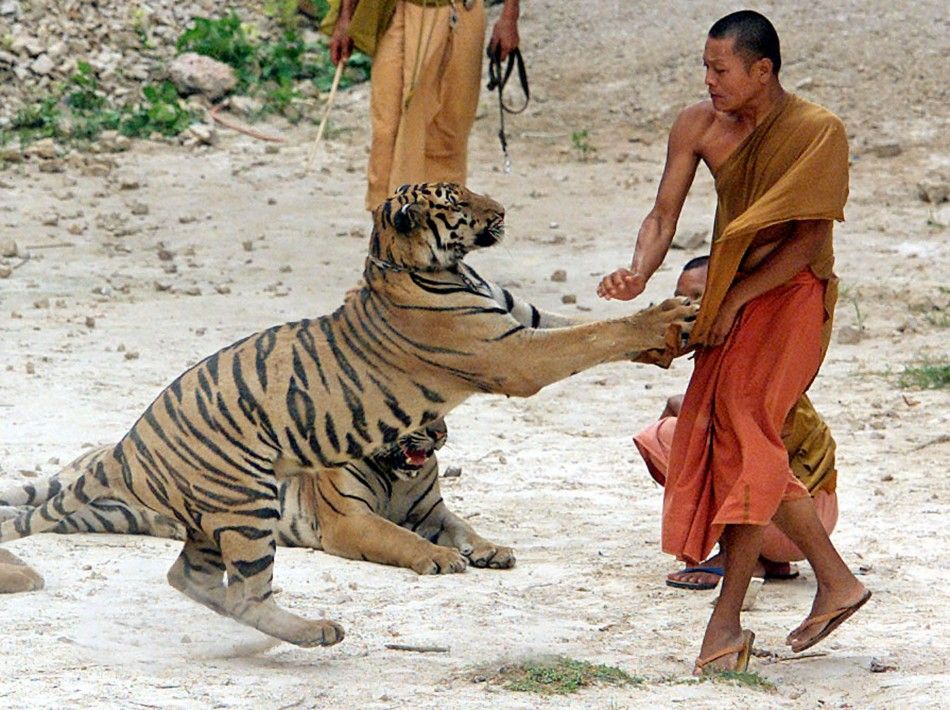
Is there ever a truly random animal attack?
In biology, randomness usually means incomplete data rather than absence of cause.
An animal may react to scent signals humans cannot detect. It may respond to subtle body posture interpreted as threat. It may be ill, starving, or neurologically compromised.
From a human viewpoint, the absence of visible cause feels like randomness. From an evolutionary perspective, behavior rarely occurs without trigger.
Even neurological disorders, such as rabies, follow biological processes.
Randomness is often a placeholder for what we have not yet identified.
When Humans Become the Unpredictable Variable
Ironically, humans are often the most unpredictable element in animal encounters.
Running triggers chase responses. Direct eye contact can signal challenge. Turning your back can signal vulnerability.
Many animal attacks labeled “without reason” involve subtle human behaviors that unintentionally activated instinctive responses.
In this sense, the interaction becomes a miscommunication between species.
Animals do not operate inside moral frameworks. They operate inside survival frameworks.
When they kill, it is rarely senseless within their biological system. It may be tragic. It may be terrifying. But it is usually rooted in instinct, environment, and survival mechanisms rather than emotion or cruelty.
Understanding that difference does not erase the danger — but it replaces mystery with biology.