
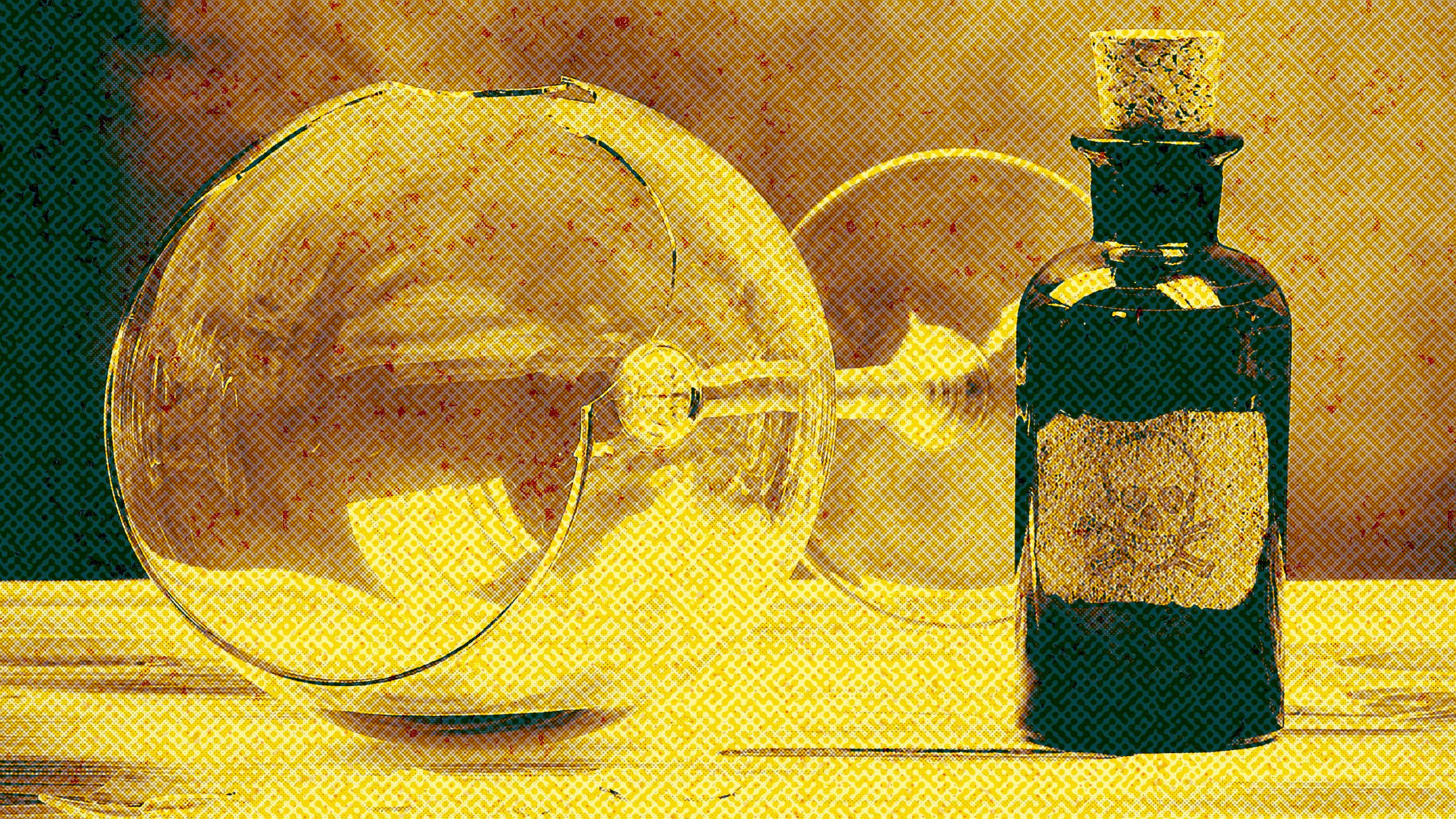

When people think about poisons, their imagination usually stops at a short list of infamous names. Cyanide, arsenic, and strychnine have dominated stories of murder, espionage, and execution for centuries, earning a reputation as the ultimate chemical killers. Yet from a scientific point of view, these substances are relatively crude. They are dangerous, yes—but they are far from the most lethal compounds known to exist.
Modern toxicology has revealed a much darker hierarchy. Beyond the poisons familiar to history books lies a class of substances so potent that even microscopic quantities can overwhelm the human body. Some occur naturally, produced by plants, animals, or bacteria as evolutionary defenses. Others are the result of deliberate human engineering, designed during periods of intense military research. What they all share is an extraordinary ability to interfere with fundamental biological processes such as nerve signaling, muscle contraction, and cellular metabolism.
Understanding how toxic a substance truly is requires more than simply labeling it “deadly.” Scientists rely on precise measurements, most commonly the LD50, or lethal dose for 50 percent of a test population. This figure, expressed per kilogram of body weight, allows researchers to compare substances objectively. On this scale, familiar poisons like cyanide appear almost mild when set beside compounds whose lethal doses are measured in micrograms—or even nanograms.
Toxicity is also shaped by context. The same substance can be relatively harmless in one form and devastating in another. Route of exposure, chemical structure, and even timing all play a role. A metal swallowed might pass through the body with little effect, while a related compound absorbed through the skin or lungs can prove fatal weeks or months later. These nuances are why poison science is both precise and deeply unsettling.
This article explores five substances that sit at the extreme end of the toxicity spectrum. Ranked in ascending order, each one is vastly more dangerous than the poisons most people recognize by name. Together, they illustrate how fragile human biology can be when confronted with chemicals capable of shutting down the most basic systems that keep us alive.
5. Ricin
Ricin is one of the most infamous plant-derived poisons, known both for its extreme toxicity and its association with political assassinations. Its most widely cited use occurred in 1978, when Bulgarian dissident Georgi Markov was murdered in London. While waiting at a bus stop near Waterloo Bridge, Markov felt a sudden sharp sensation in the back of his thigh after being jostled by a man carrying an umbrella. He soon developed a severe fever and was admitted to hospital, where he died three days later.
An autopsy revealed a microscopic pellet embedded in his leg, manufactured from a platinum–iridium alloy and drilled to hold a tiny quantity of ricin. Investigators concluded that the poison had likely been injected using a modified umbrella, turning an everyday object into a lethal delivery system. The case became a textbook example of covert poisoning during the Cold War.

Ricin is derived from the beans of the castor oil plant, Ricinus communis. While castor oil itself is widely used in medicine, cosmetics, and industry, ricin remains in the solid waste material left after oil extraction. Chemically, ricin is a glycoprotein that disrupts protein synthesis inside cells. Once protein production is halted, cells quickly die, leading to widespread tissue damage and organ failure.
The toxicity of ricin depends heavily on how it enters the body. When ingested orally, its LD50 ranges from approximately one to twenty milligrams per kilogram of body weight. Inhalation or injection requires far smaller amounts to be lethal, making ricin particularly dangerous when weaponized or delivered in aerosolized form.
4. VX
VX is the only fully synthetic compound among the five poisons discussed here, and it is also one of the most feared nerve agents ever created. It emerged in the early 1950s during research conducted by Imperial Chemical Industries into new classes of insecticides. Scientists quickly realized that the compound’s toxicity made it completely unsuitable for agricultural use. Instead, it was classified as a chemical weapon.
In its physical form, VX is an oily, amber-colored liquid with a consistency similar to engine oil. Its danger lies not in speed alone, but in how relentlessly it disrupts the nervous system. Normal movement and breathing depend on controlled signals passing between nerve cells and muscles. These signals rely on a neurotransmitter called acetylcholine, which must be broken down after each signal by an enzyme known as acetylcholinesterase. VX blocks this enzyme entirely.

When acetylcholinesterase is disabled, nerve signals continue firing without restraint. Muscles contract continuously, including those responsible for breathing. Victims eventually die from respiratory failure as the body loses the ability to regulate muscle movement. Even tiny amounts absorbed through the skin can be fatal, making VX particularly dangerous compared to gases that require inhalation.
VX became infamous during the Cold War, when both Western and Eastern blocs developed and stockpiled nerve agents. Its reputation was later reinforced through popular culture, most notably in the film The Rock. Despite its notoriety, confirmed human deaths caused directly by VX are rare. One documented fatality involved a former member of the Aum Shinrikyo cult. By contrast, an accidental release in Skull Valley, Utah, in 1968 killed approximately 4,000 sheep, illustrating how devastating even limited exposure can be.
Estimates place the LD50 of VX as low as three micrograms per kilogram of body weight, although some sources suggest slightly higher figures. Regardless of the exact value, it remains one of the most lethal nerve agents ever synthesized.
3. Batrachotoxin
Poisoned weapons are often associated with plant-based toxins such as curare, traditionally used by indigenous hunters in South America. While curare is dangerous, it is not the most potent poison employed in this way. That distinction belongs to batrachotoxin, a substance found in the skin of certain tiny frogs.
Batrachotoxin is produced by specific frog species native to western Colombia, most notably the golden Phyllobates terribilis and the multicolored Phyllobates bicolor. Indigenous hunters carefully collect these frogs and gently heat them over a fire. This process causes the toxin to seep onto the skin, where it can be transferred onto the tips of darts used for hunting.
The amount required to be lethal is astonishingly small. With an LD50 of around two micrograms per kilogram, an amount comparable to a few grains of table salt is enough to kill a human adult. At the cellular level, batrachotoxin interferes with sodium ion channels in nerve and muscle cells. These channels normally open and close to transmit electrical signals. The toxin locks them open permanently.
This constant flow of sodium ions overwhelms the cells, leading to uncontrollable nerve firing, muscle dysfunction, and ultimately fatal heart failure. Death can occur rapidly, depending on the dose and route of exposure.
An intriguing aspect of batrachotoxin is that frogs raised in captivity are not poisonous at all. This observation led scientists to conclude that the toxin is not produced by the frogs themselves but acquired through their diet. Supporting this theory, researchers later discovered that certain birds in Papua New Guinea carry the same toxin in their feathers and skin.
These birds, belonging to the Pitohui genus, cause numbness when handled. Further investigation suggested that both frogs and birds obtain batrachotoxin from beetles they consume. Although the toxin is far less concentrated in birds, the shared source demonstrates how powerful poisons can move through ecosystems in unexpected ways.
2. Maitotoxin
Many of the world’s most powerful poisons come from the ocean. Marine ecosystems contain a wide range of toxins, some of which enter the human body through contaminated seafood. Saxitoxin, for example, is a well-known cause of shellfish poisoning and is often linked to harmful algal blooms. Even among these highly dangerous substances, maitotoxin stands apart.Maitotoxin is considered the most lethal marine toxin known. It is produced by a type of microscopic plankton called a dinoflagellate. These organisms form part of the base of the marine food chain, which allows the toxin to move upward through fish and shellfish before reaching humans. From a chemical perspective, maitotoxin is extraordinarily complex, with a molecular structure so intricate that synthesizing it in a laboratory remains a major challenge for chemists.
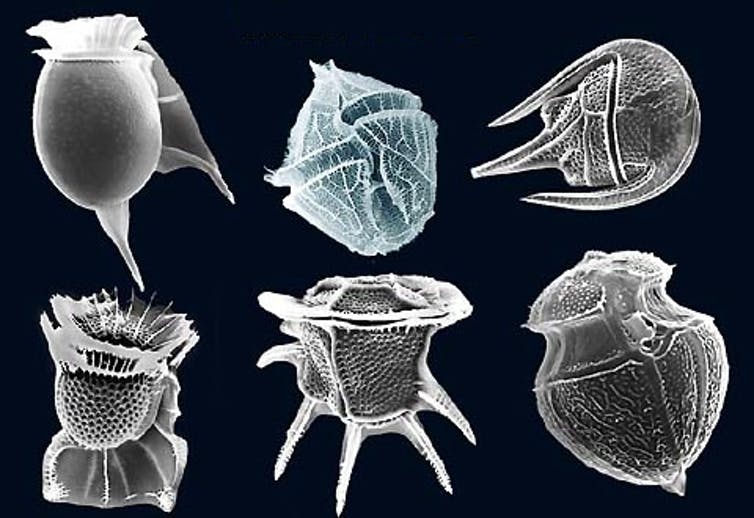
In terms of potency, maitotoxin is estimated to be roughly an order of magnitude more toxic than batrachotoxin. Its LD50 is so low that even trace exposure can be catastrophic. Maitotoxin primarily targets the heart. It acts as a cardiotoxin by dramatically increasing the flow of calcium ions through cardiac muscle cell membranes. This uncontrolled influx disrupts the normal rhythm and strength of heart contractions, ultimately leading to fatal heart failure.
1. Botulinum toxin
Among scientists who study toxic substances, there is some debate about how best to compare different poisons. Even so, there is broad agreement on one point: botulinum toxin is the most toxic substance known to science.
Botulinum toxin is produced by anaerobic bacteria of the genus Clostridium. Its LD50 is almost unimaginably small. Estimates suggest that as little as one nanogram per kilogram of body weight can be lethal to humans. Based on animal studies, an intravenous dose of just a fraction of a milligram would be enough to kill an adult weighing seventy kilograms.
The toxin was first identified in late eighteenth-century Germany as the cause of severe food poisoning linked to improperly prepared sausages. The name itself comes from the Latin word botulus, meaning sausage. Several types of botulinum toxin exist, with type A being the most potent. Chemically, these toxins are large polypeptides made up of more than a thousand amino acids.
Botulinum toxin exerts its deadly effects by blocking the release of acetylcholine, the neurotransmitter responsible for triggering muscle contractions. Without this signal, muscles become paralyzed. When the muscles involved in breathing are affected, death occurs due to respiratory failure.
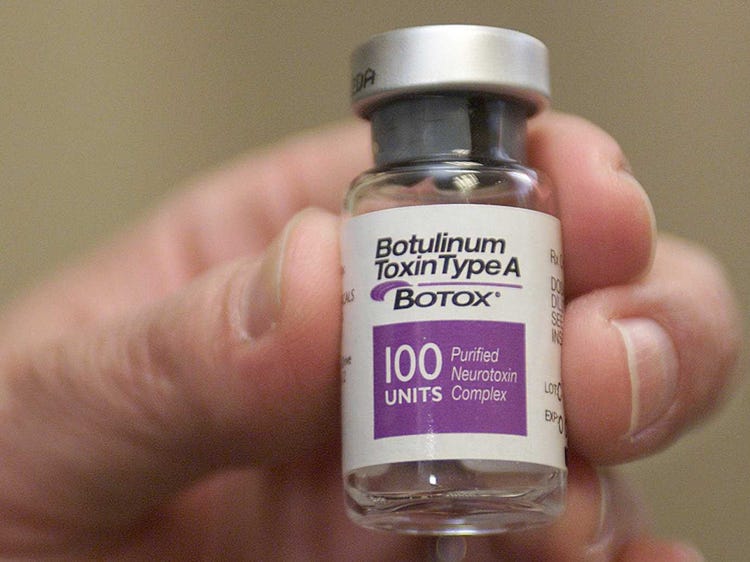
Paradoxically, this same mechanism has led to beneficial medical applications. In carefully controlled doses, botulinum toxin is used therapeutically and cosmetically under the name Botox. Tiny, targeted injections temporarily relax specific muscles, reducing wrinkles or treating medical conditions such as crossed eyes and muscle spasms. The margin between a therapeutic dose and a lethal one, however, remains extremely narrow.
There is growing scientific interest in the medical potential of toxic substances more broadly. Venoms and poisons that evolved to incapacitate or kill can sometimes be repurposed into powerful medicines when used with precision. One example is the venom of the Brazilian pit viper Bothrops jararaca, which contains compounds that led to the development of important treatments for high blood pressure.
Centuries ago, the physician Paracelsus observed that every substance can be a poison, and that safety depends on dosage. Modern toxicology continues to confirm this insight. We live surrounded by chemicals and compounds that can be dangerous under the wrong conditions, yet beneficial or harmless when understood and handled correctly.