
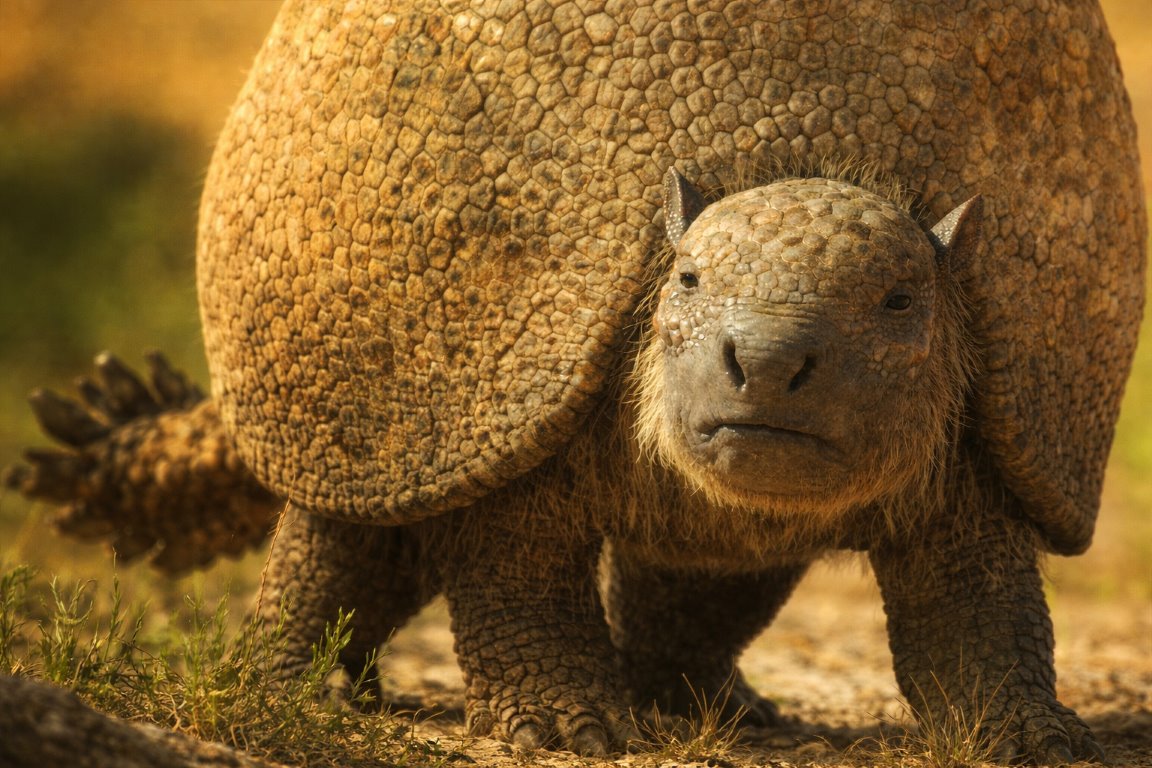

In the ancient world, survival wasn’t just about speed or size. It was about protection. For every predator that evolved sharper teeth or stronger jaws, another creature evolved thicker skin, heavier plates, reinforced bone, or spikes long enough to make any attack a serious mistake.
Armor in prehistoric ecosystems wasn’t decorative. It was engineering. It was biology pushed to extremes. Some animals became so well protected that attacking them carried enormous risk — broken teeth, shattered legs, deep puncture wounds. In some cases, the safest strategy for predators may have been simple avoidance.
Of course, nothing in nature is truly invincible. But certain prehistoric animals came remarkably close. Their armor was so effective that very few hunters could realistically penetrate it without suffering consequences.
Let’s explore the creatures that turned defense into dominance.
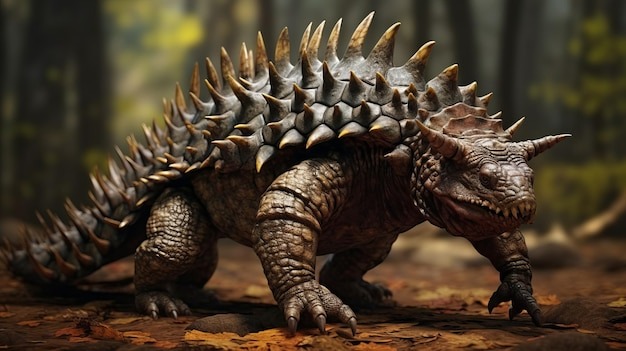
Ankylosaurus — The Living Fortress
If one animal deserves the title of walking tank, it’s Ankylosaurus.
Its body was covered in osteoderms — thick bony plates embedded within the skin. These plates weren’t randomly scattered. They formed overlapping armor across its back, sides, and even parts of its neck. Some specimens show small spikes along the flanks, adding an extra deterrent.
But what truly made Ankylosaurus nearly unbreakable was its tail club.
The club wasn’t just a lump of bone. It was a fused mass of vertebrae reinforced by tendons, forming a solid, heavy structure capable of delivering enormous force. Biomechanical studies suggest a single swing could break the leg bones of a large predator like Tyrannosaurus rex.
Now imagine trying to bite through a back covered in thick armor while risking a shattered femur from behind.
Predators depend on mobility. One broken leg is often fatal. Ankylosaurus weaponized that reality.
Its armor didn’t need to be completely impenetrable. It only needed to make the cost of attack too high.
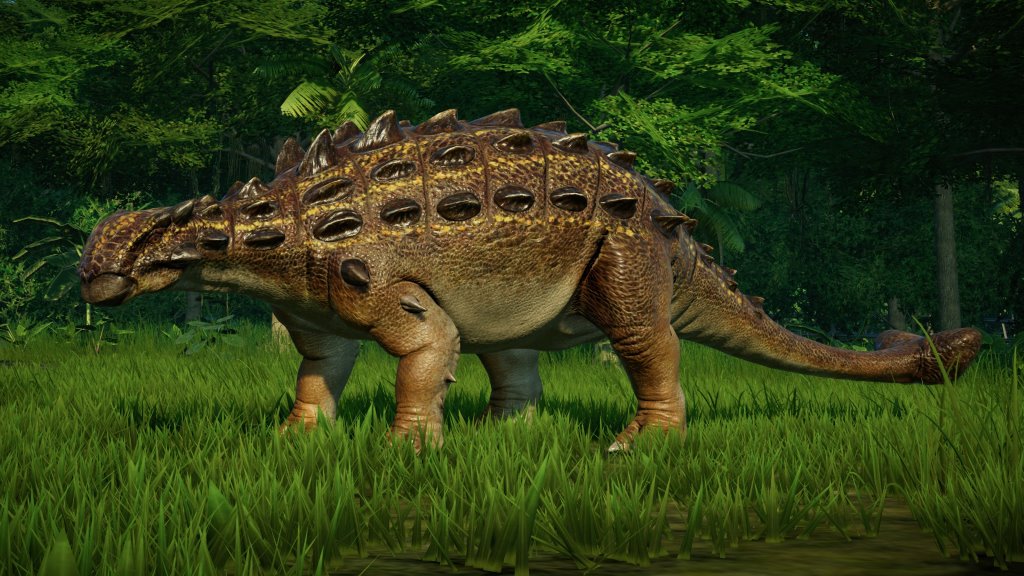
Euoplocephalus — Spiked and Shielded
Closely related to Ankylosaurus, Euoplocephalus was another armored herbivore that made life difficult for predators.
Its back was layered with bony plates, and its neck was protected by ring-like armor structures. Even its eyelids may have had small bony deposits — subtle but meaningful protection.
The tail club was present here too, though slightly smaller than in Ankylosaurus. Combined with side spikes, this created a defensive perimeter that punished close contact.
Imagine a predator circling, searching for a soft spot. The underbelly might have been vulnerable, but accessing it required flipping or destabilizing a multi-ton animal built low to the ground.
Low center of gravity. Reinforced hide. Defensive weapons at both ends.
Armor doesn’t always need to be thick everywhere. It needs to be strategically placed.
Euoplocephalus mastered that balance.
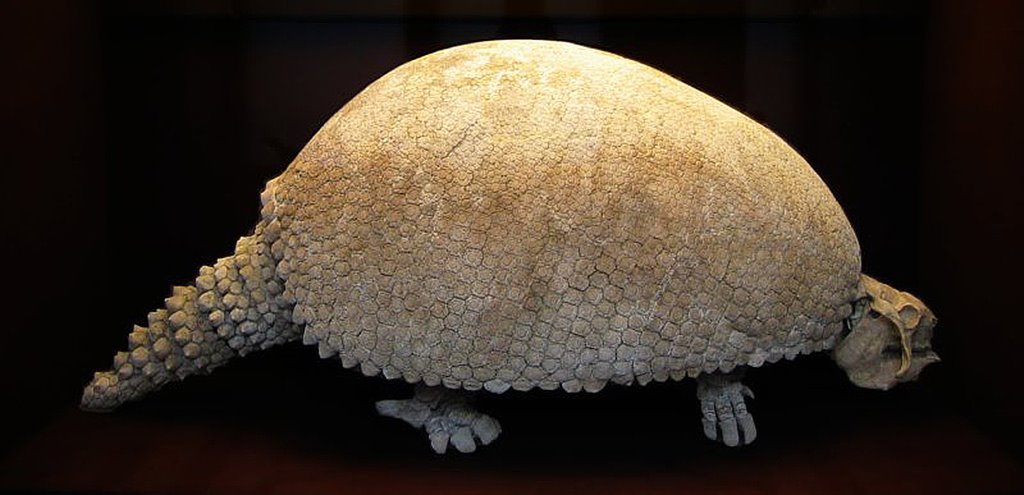
Glyptodon — The Armored Mammalian Dome
Fast forward millions of years after dinosaurs disappeared. During the Ice Age, South America hosted Glyptodon — a giant relative of modern armadillos.
Unlike its small modern cousins, Glyptodon grew as large as a compact car. Its shell wasn’t flexible like an armadillo’s. It was a rigid dome composed of hundreds of tightly packed bony plates fused together.
This dome could reach several centimeters in thickness. Beneath it, thick skin added further protection.
For predators like saber-toothed cats, penetrating this armor would have been extremely difficult. The shell curved smoothly, deflecting bites and preventing deep penetration.
Some species of Glyptodon even had spiked tails, similar in function to ankylosaurs.
The combination of mass and armor created a simple equation: attacking was exhausting and risky.
Predators prefer efficient kills. Glyptodon offered the opposite.
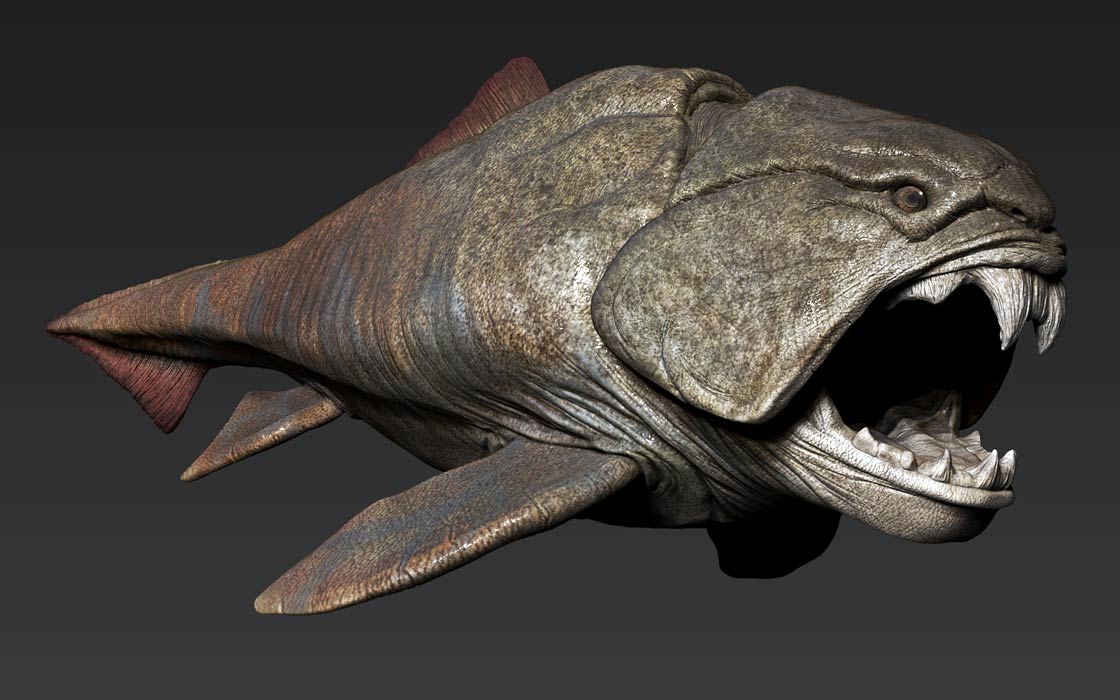
Dunkleosteus — Head Encased in Bone
Long before land dinosaurs existed, Devonian seas were ruled by armored fish. Dunkleosteus stands out not only for its powerful jaws, but for its thick cranial armor.
Its head and upper body were encased in heavy bony plates that functioned like a helmet and chest shield combined. In an ocean filled with other large predators, this armor likely reduced fatal head injuries.
Unlike modern fish with soft scales, Dunkleosteus carried rigid protection integrated directly into its skeleton.
A predator trying to bite its head would encounter bone — not flesh.
Armor in water is different from armor on land. Buoyancy reduces weight concerns, allowing heavier plating without mobility loss. Dunkleosteus took full advantage of that.
Its protection wasn’t full-body, but what it covered — brain and vital organs — mattered most.

Doedicurus — The Spiked Ice Age Defender
Doedicurus, another massive armored mammal related to Glyptodon, raised the concept of prehistoric armor to another level.
Its shell was reinforced and rounded, but its tail ended in a heavy bony knob covered in spikes.
Unlike a simple club, this structure resembled a medieval mace.
If a predator approached from behind, one well-timed swing could puncture muscle or break bone. Combined with a dome-shaped shell protecting its back, Doedicurus essentially created a defensive system that discouraged every angle of attack.
Imagine being a large Pleistocene predator, attempting to bite into something resembling a rolling boulder with a weapon attached.
Defense can shift power in ecosystems. When prey become too costly to hunt, predators must adapt or move on.
Doedicurus may not have been invulnerable, but it was likely one of the least appealing targets available.
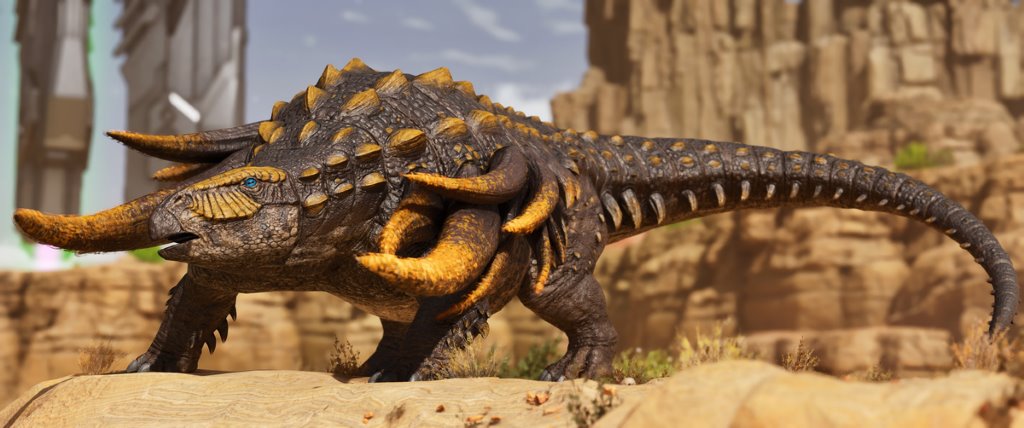
Edmontonia — Armor With Attitude
Edmontonia was another nodosaurid dinosaur covered in armor, but with a more aggressive twist.
Along its shoulders were large spikes projecting outward. These weren’t just for show. They expanded the animal’s defensive radius, making close contact dangerous.
Its body armor covered much of its back, while its spikes targeted the height at which theropod predators would attack.
Rather than waiting passively, Edmontonia may have turned sideways when threatened, presenting its spiked flank like a wall of blades.
Armor doesn’t always mean hiding. Sometimes it means standing your ground.
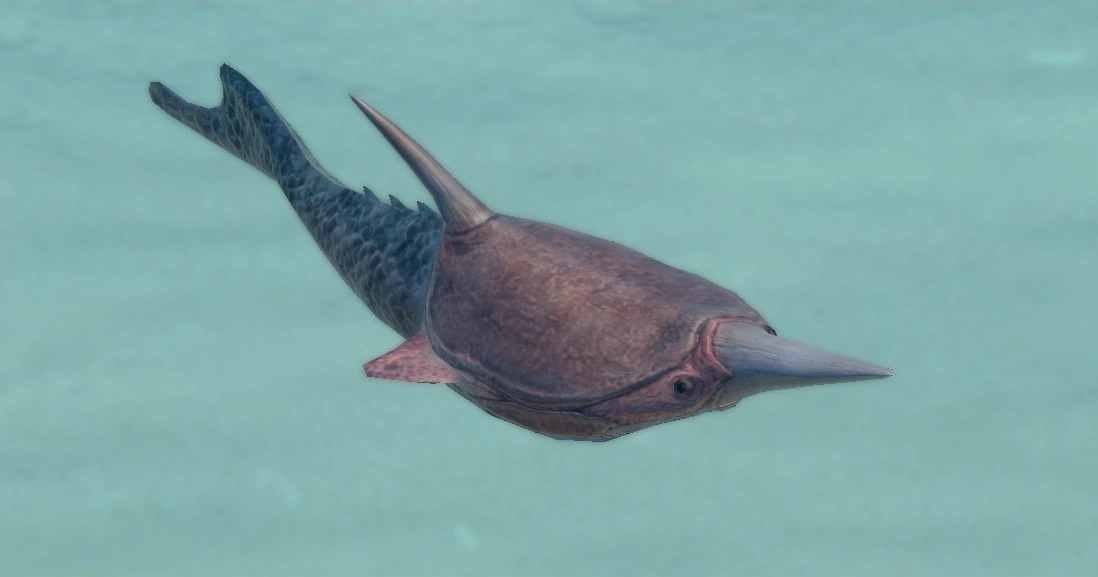
Early Armored Fish That Changed the Game
Long before dinosaurs walked the Earth, the oceans were already experimenting with biological armor. During the Ordovician and Devonian periods, jawless fish known as ostracoderms evolved heavy protective plates that shielded their most vulnerable regions.
One of the best-known examples is Cephalaspis. This small, bottom-dwelling fish had a wide, bony head shield shaped almost like a horseshoe. The plate covered the brain and sensory organs — critical structures in a world filled with larger marine predators. While its body remained more flexible, the reinforced skull acted as a defensive barrier against attacks from above.
Another well-documented armored genus is Pteraspis. Unlike Cephalaspis, Pteraspis had a more streamlined armored shield that may have helped it cut through water efficiently. Its head and upper body were encased in rigid dermal bone, forming a protective structure that would have made head-on attacks difficult. In marine environments where predators often targeted the head to disable prey quickly, this design offered a significant survival advantage.
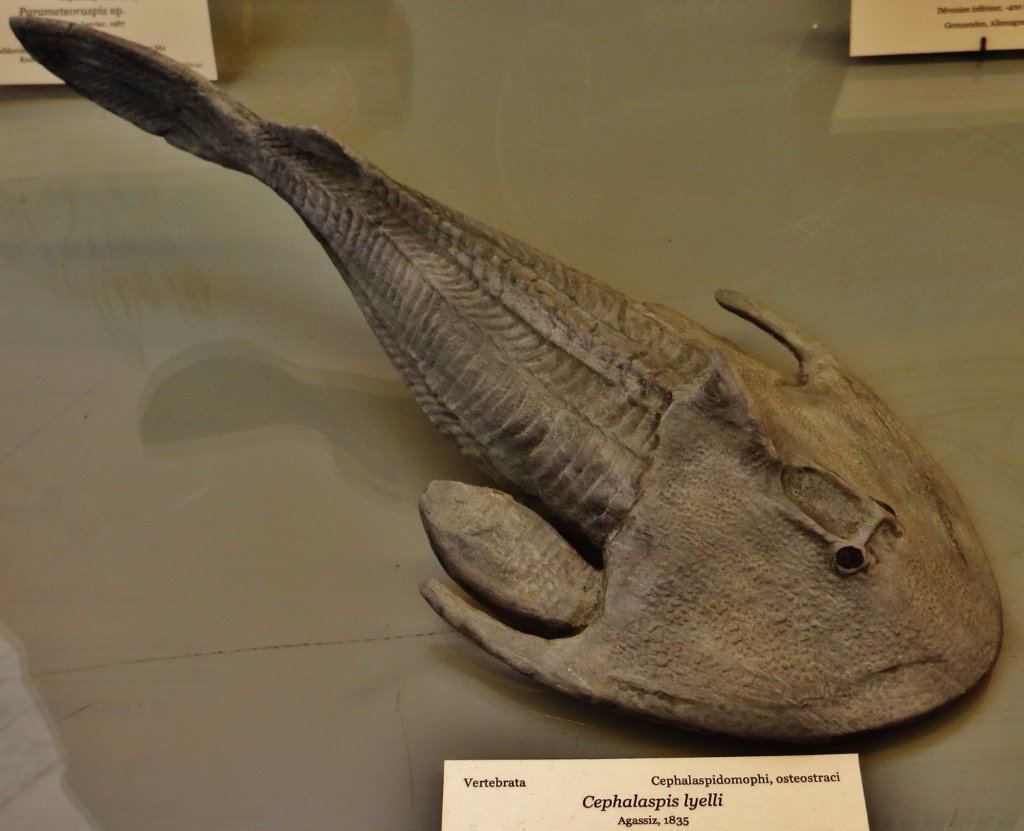
Then there’s Drepanaspis, a flattened, heavily plated fish that likely lived close to the sea floor. Its entire upper surface was covered in overlapping bony plates. This configuration created a natural shield against ambush predators attacking from above. While it lacked jaws and active predatory abilities, its armor dramatically reduced vulnerability.
Even earlier, during the Ordovician, Arandaspis carried thick dermal armor plates over its head and front body. It represents one of the earliest examples of vertebrate skeletal armor. At a time when complex predation was still evolving, such protection may have been revolutionary.
These early armored fish demonstrate an important evolutionary principle: before speed and biting power dominated ecosystems, protection became a primary survival strategy. Instead of outrunning predators, these animals reinforced themselves.
Their armor was not decorative. It was structural. Integrated into the skeleton. Built to absorb impact.
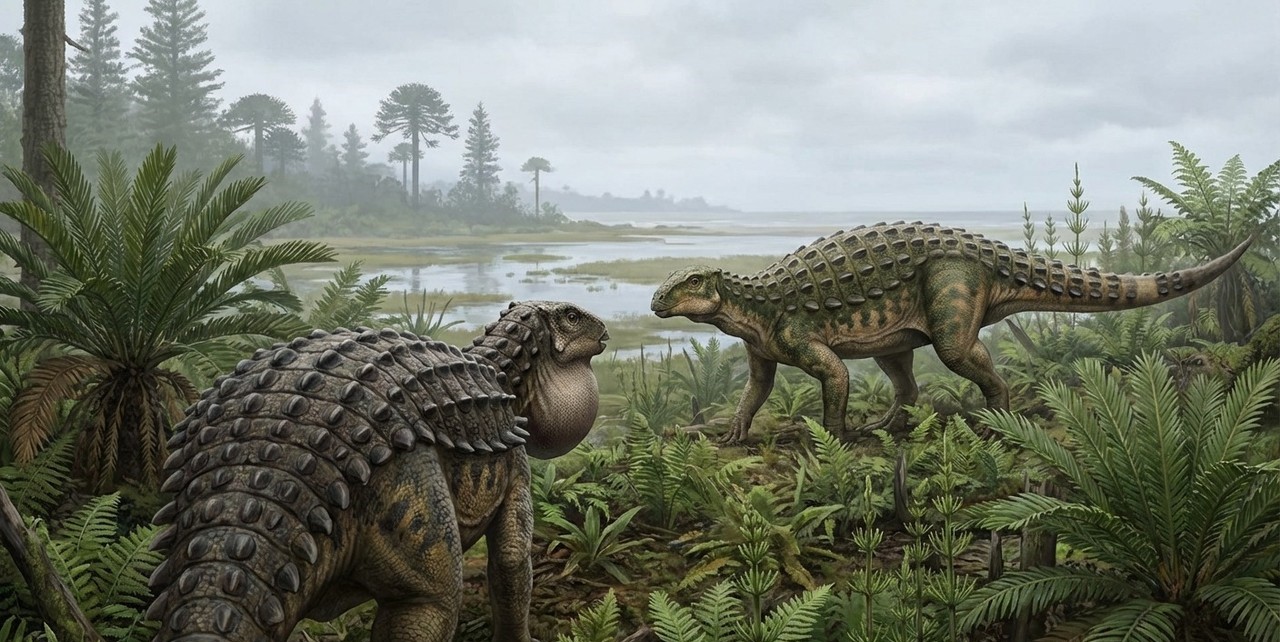
Scelidosaurus — Early Experiment in Dinosaur Armor
Moving forward to the Jurassic period, Scelidosaurus represents one of the earliest armored dinosaurs. Its body was lined with rows of bony scutes embedded within the skin — not yet as extreme as later ankylosaurs, but clearly trending in that direction.
These osteoderms formed a continuous protective layer along its back and flanks. While it lacked a tail club, the reinforced hide would have made biting into its upper body a challenge. Predators attacking from above would meet hardened bone rather than soft tissue.
Scelidosaurus marks a turning point in terrestrial defense. Armor was no longer limited to fish. It had moved onto land in a serious way.
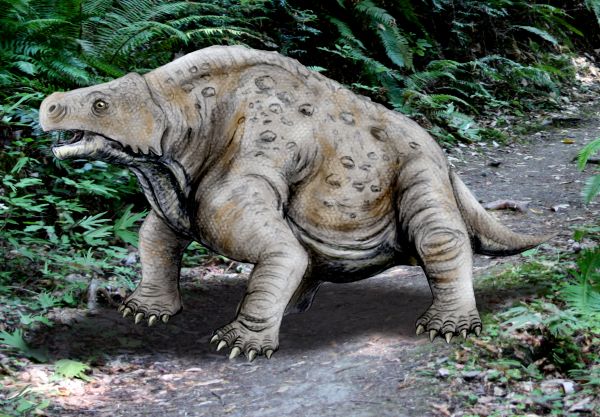
Pareiasaurus — Thick Bones and Defensive Mass
During the Permian period, Pareiasaurus roamed prehistoric landscapes as a heavily built herbivore. Although not plated like ankylosaurs, its skull was thick and often ornamented with bony protrusions.
Its overall skeletal robustness suggests a strategy centered on mass and resistance. Dense bones and a stocky frame would have made it difficult to subdue quickly. In ecosystems dominated by saber-toothed gorgonopsians, durability mattered.
Pareiasaurus shows that armor doesn’t always mean visible plates. Sometimes it means reinforcing the entire structure.
Why Armor Reshaped Entire Prehistoric Ecosystems
Armor was never just decoration. It was an answer to pressure.
In the oceans of the Ordovician and Devonian, early vertebrates like Arandaspis, Cephalaspis, and Pteraspis faced growing predatory threats as jaws and active hunting strategies evolved. Their response was not speed or aggression — it was reinforcement. Thick dermal bone plates shielded the head and upper body, protecting vital organs at a time when even a single disabling bite could end a lineage.
On land, millions of years later, dinosaurs like Scelidosaurus continued that evolutionary logic. Osteoderms embedded in the skin formed layered defenses along the spine and flanks. Later ankylosaurs would take this strategy to its extreme, but even early forms show how consistently nature returned to the same solution: protect what matters most.
What makes prehistoric armor so fascinating is not just thickness — it’s placement. The skull, the spine, the neck, the upper torso. These are the regions predators target first. Armor evolved precisely where survival depended on it.
And it worked.
Fossil evidence shows bite marks that never fully penetrated. Healed injuries that suggest attacks failed. Tooth damage in predators likely caused by biting into reinforced bone. In ecosystems where energy expenditure meant everything, a hunt that risked broken teeth or fractured limbs was often not worth the effort.
Armor didn’t make these animals untouchable. It made them expensive.
That distinction matters.
Predators operate on cost-benefit calculations shaped by instinct. If a target demands too much energy, carries too much risk, or offers too little reward compared to easier prey, natural selection favors avoidance. Over time, heavily armored species could thrive not because they were invincible, but because they were inefficient to attack.
There’s also something architecturally impressive about prehistoric armor. Unlike modern reptiles or mammals with lighter protective adaptations, many ancient species integrated bone directly into the skin or skull in ways that feel almost engineered. Domed shells, interlocking plates, reinforced cranial shields — these weren’t fragile coverings. They were structural frameworks.
In a world defined by claws, teeth, and crushing jaws, some animals answered not with sharper weapons, but with thicker walls.
And for millions of years, that was enough.