
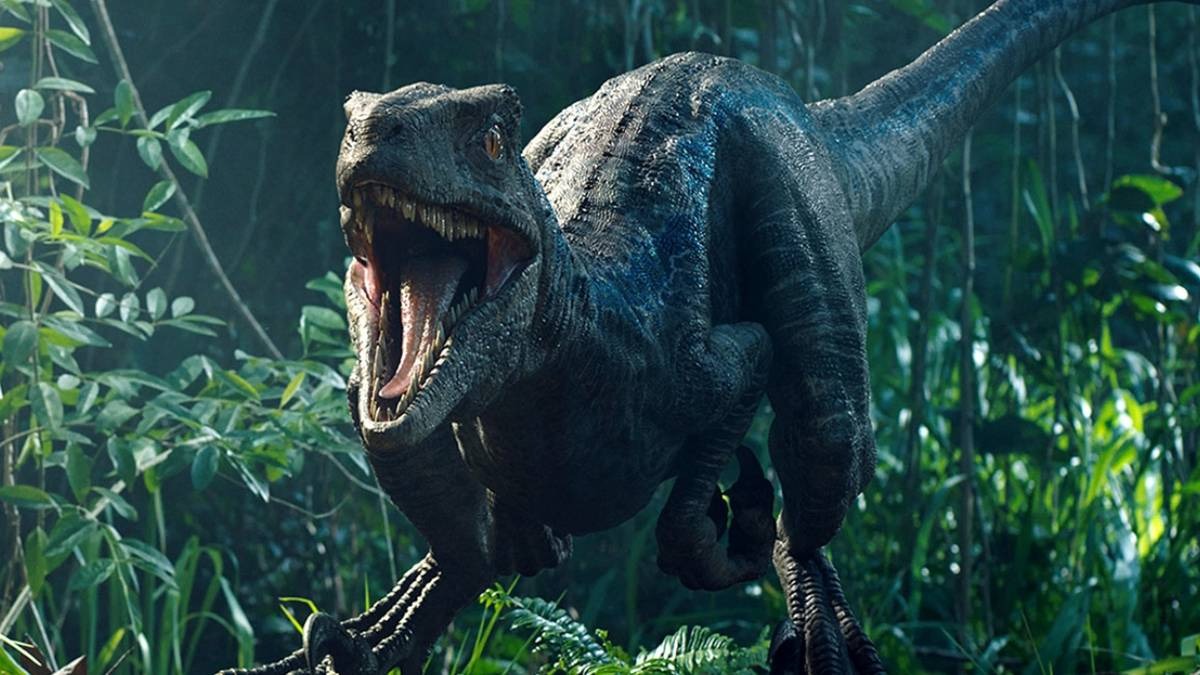

Long before humans ever worried about predators in the dark, the Earth belonged to animals that defined violence in a completely different scale. Dinosaurs didn’t just hunt. They perfected methods of killing that were efficient, brutal, and sometimes disturbingly specialized. Some crushed bone like dry twigs. Others sliced flesh with surgical precision. A few may have simply overwhelmed prey with raw size and momentum, turning survival into a losing gamble from the first second.
What makes these prehistoric predators especially unsettling isn’t only their size. It’s the mechanics — the way their bodies evolved into weapons. Teeth shaped like steak knives. Jaws designed to withstand shattering impact. Claws that could open a body in a single motion. Each method tells a story about pressure, adaptation, and the ruthless logic of natural selection.
Let’s look at the dinosaurs that didn’t just kill — they did it in ways that still feel terrifying millions of years later.
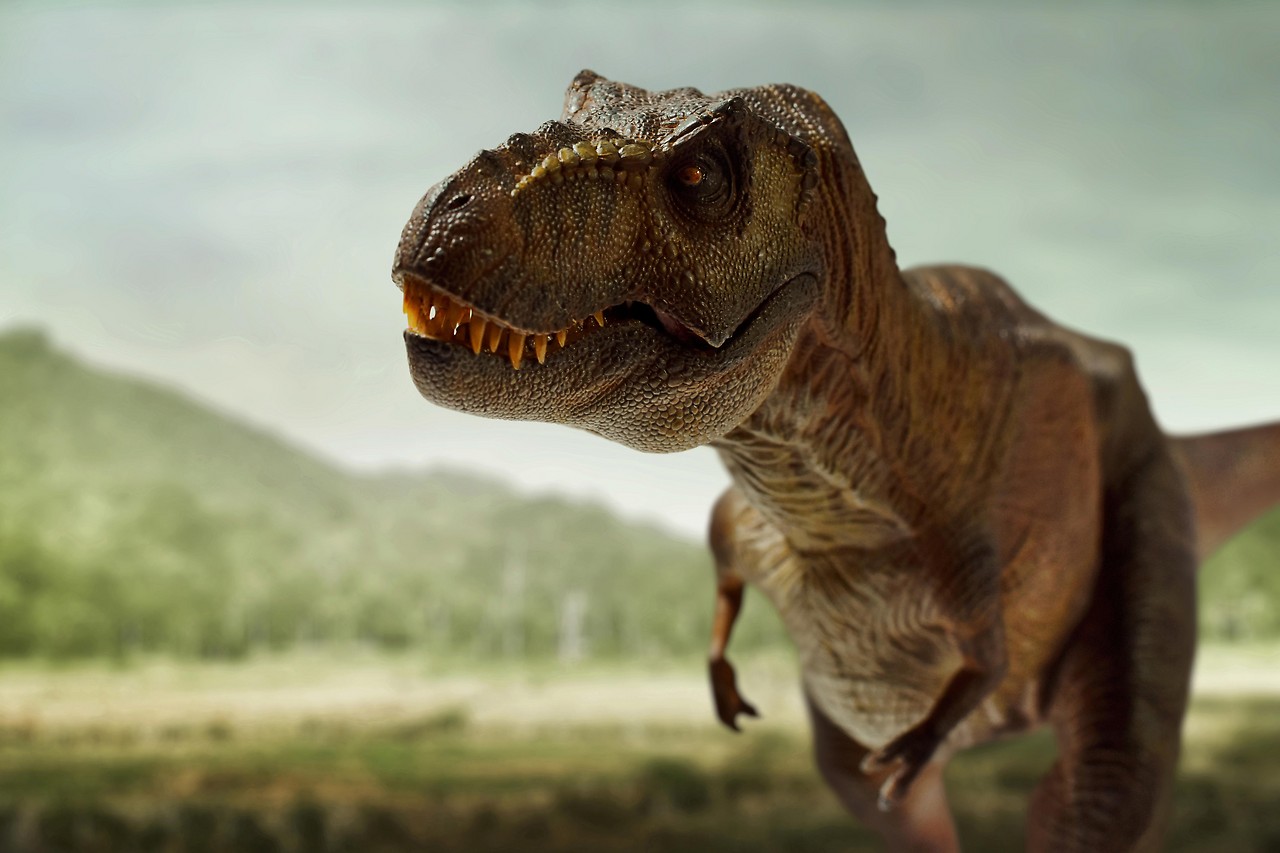
Tyrannosaurus rex — The Bone-Crushing Executioner
When people imagine dinosaur violence, they usually picture one animal first: Tyrannosaurus rex. And honestly, it earns that reputation.
Unlike many predators that rely on slicing, T. rex relied on force. Its bite wasn’t just strong — it was catastrophic. Modern biomechanical studies estimate its bite force exceeded 35,000 newtons. That’s enough to crush bone, not merely pierce it. Fossilized bones of other dinosaurs show deep, splintered bite marks consistent with crushing rather than cutting.
Instead of delicately carving flesh, T. rex likely bit down, shattered bone, and swallowed chunks whole. Imagine being grabbed not by a blade, but by a hydraulic press with teeth. Its thick, banana-shaped teeth weren’t thin and serrated like steak knives — they were heavy, reinforced spikes built to withstand impact without snapping.
There’s also evidence that T. rex could consume entire bones, digesting marrow and nutrients fully. That suggests a feeding method closer to a hyena than a typical reptile. Efficient. Relentless. No waste.
And here’s the unsettling part: when something can destroy bone that easily, escape becomes almost irrelevant. Armor wouldn’t help much. Thick hide wouldn’t matter. One well-placed bite could disable instantly.
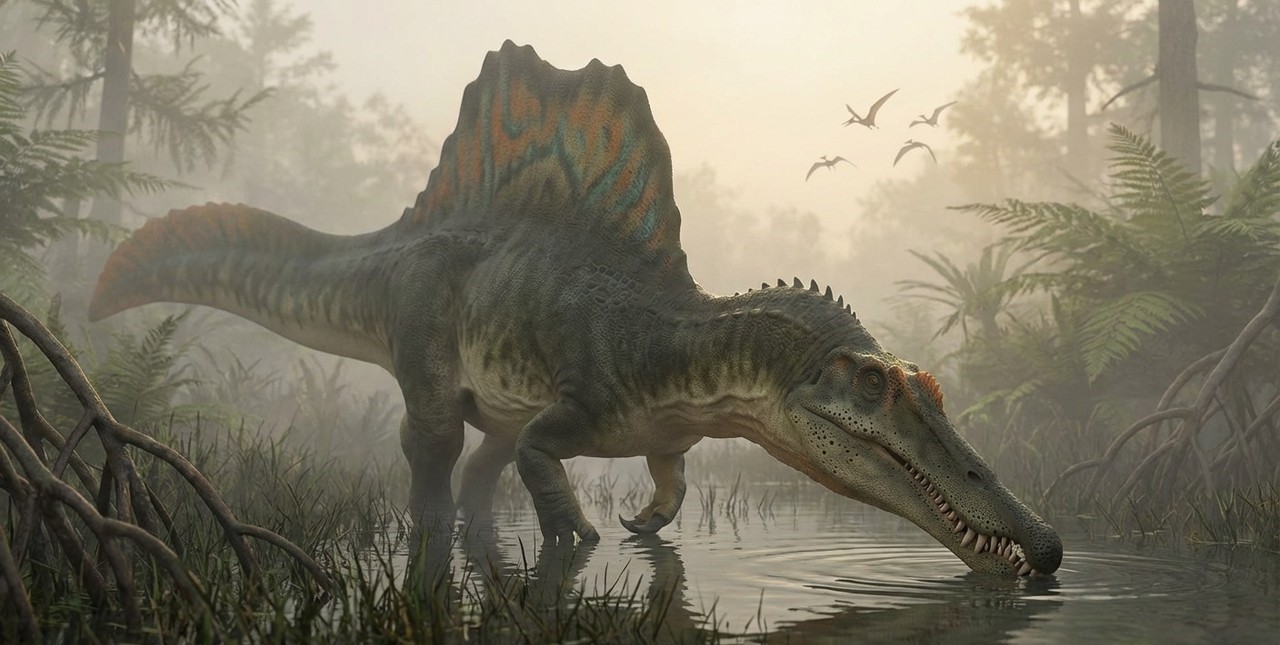
Spinosaurus — The Aquatic Ambusher
Spinosaurus wasn’t built like most large theropods. It had a long, crocodile-like snout lined with conical teeth — perfect for gripping slippery prey. But don’t mistake that shape for weakness.
Recent fossil discoveries suggest Spinosaurus spent significant time in water. Its dense bones, paddle-like tail, and limb proportions indicate a semi-aquatic lifestyle. That changes the way we think about its killing strategy.
Instead of charging across open plains, Spinosaurus may have ambushed from rivers and coastal waters. Imagine standing near a prehistoric shoreline, unaware that beneath the murky surface waits a 50-foot predator.
Its teeth weren’t designed for slicing meat from massive herbivores like T. rex might have done. Instead, they were built for gripping — locking onto struggling prey and preventing escape. Large fish were likely common targets, but smaller dinosaurs venturing too close to water may have faced sudden, violent grabs.
Ambush predators are always psychologically more terrifying. You don’t see them coming. There’s no roar. Just impact.
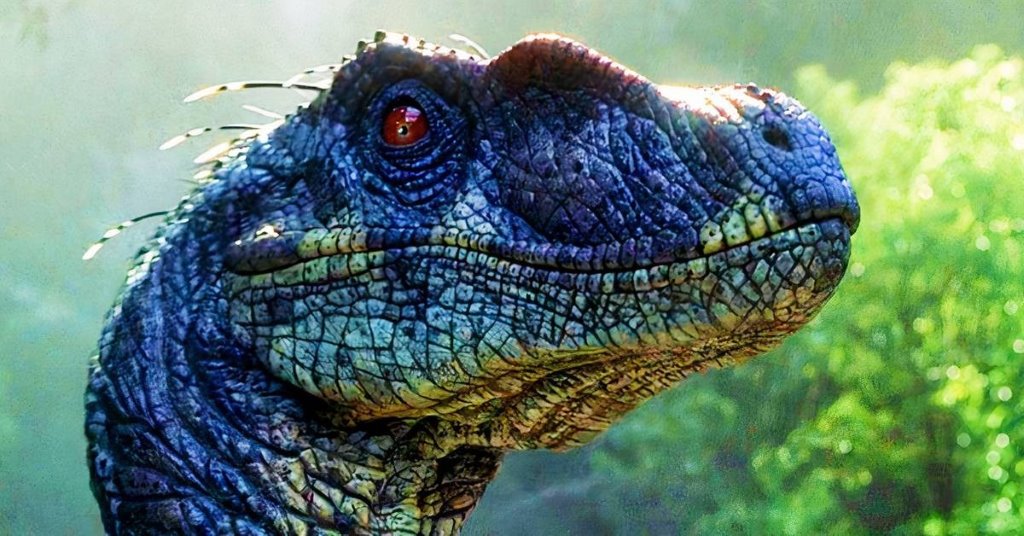
Velociraptor — The Surgical Predator
Velociraptor was not the giant monster popular films made it out to be. In reality, it was roughly turkey-sized. But size can be deceptive.
Its most lethal weapon wasn’t its teeth — it was the sickle-shaped claw on each hind foot. This curved claw, up to 3 inches long, could be extended and driven into prey. For decades, scientists debated its function. Newer research suggests it may have used this claw not for slashing, but for gripping and anchoring.
Picture a Velociraptor leaping onto a prey animal, locking its claw into flesh, using its body weight to pin it down while biting repeatedly. It may have used a method similar to modern birds of prey — maintaining balance and control while tearing with its jaws.
Some paleontologists call this “raptor prey restraint.” The predator doesn’t instantly kill. It restrains and feeds.
That method isn’t explosive like T. rex’s bone crush. It’s slower. Controlled. Almost clinical.
And in many ways, that precision makes it more disturbing.
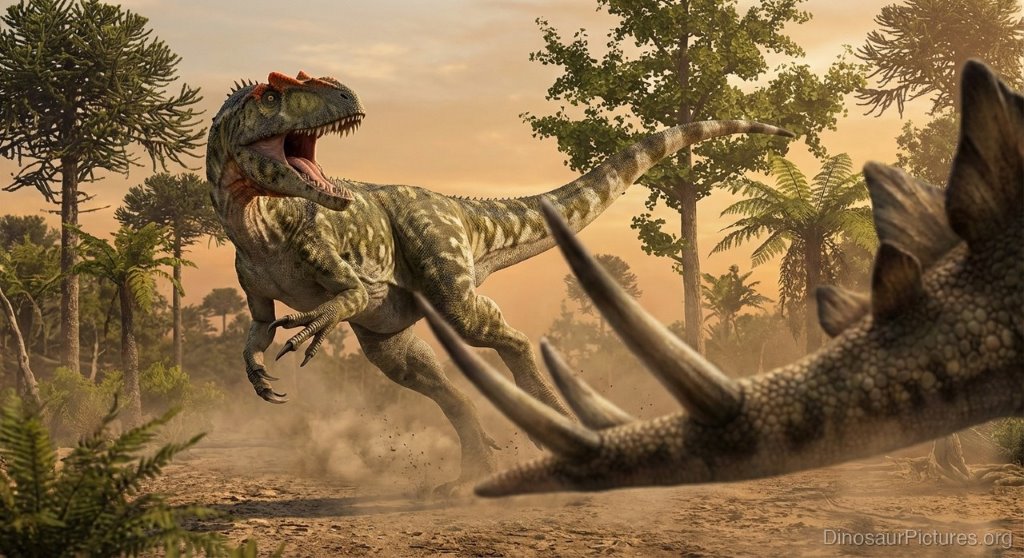
Allosaurus — The Hatchet-Jawed Hunter
Allosaurus lived millions of years before Tyrannosaurus rex, but it may have had a killing method equally brutal — just different in execution.
Unlike the bone-crushing T. rex, Allosaurus had a relatively weaker bite force. But its skull was designed for something else: flexibility and shock absorption. Some scientists believe Allosaurus may have used a “hatchet” technique — biting down and pulling back violently to tear flesh.
Its jaws could open extremely wide, and its neck muscles were powerful. Instead of crushing, it likely inflicted deep, slashing wounds that caused massive blood loss.
This suggests a different hunting style. Possibly repeated strikes. Maybe even coordinated pack behavior, though that’s still debated.
If T. rex was a hydraulic press, Allosaurus was a flesh-ripping blade attached to a muscular, aggressive frame.
Both lethal. Just in different ways.
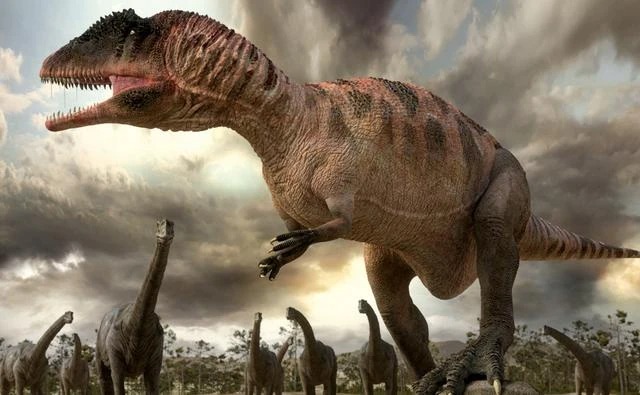
Carcharodontosaurus — The Shark-Toothed Slayer
The name literally means “shark-toothed lizard,” and it’s not exaggeration. Carcharodontosaurus had long, serrated teeth resembling those of modern great white sharks — except much larger.
These teeth were designed for slicing. They were thin enough to cut efficiently but strong enough not to snap easily. Unlike T. rex’s thick spikes, these teeth acted like steak knives.
Its strategy likely focused on inflicting massive lacerations. Deep wounds that caused rapid blood loss and tissue damage. Instead of crushing bone, it would carve through muscle.
Some large predators today, like big cats, rely on suffocation. Carcharodontosaurus may have relied on bleeding.
That difference matters. A crushing death is instant. A slicing death is often not.
And evolution doesn’t care which is more merciful.
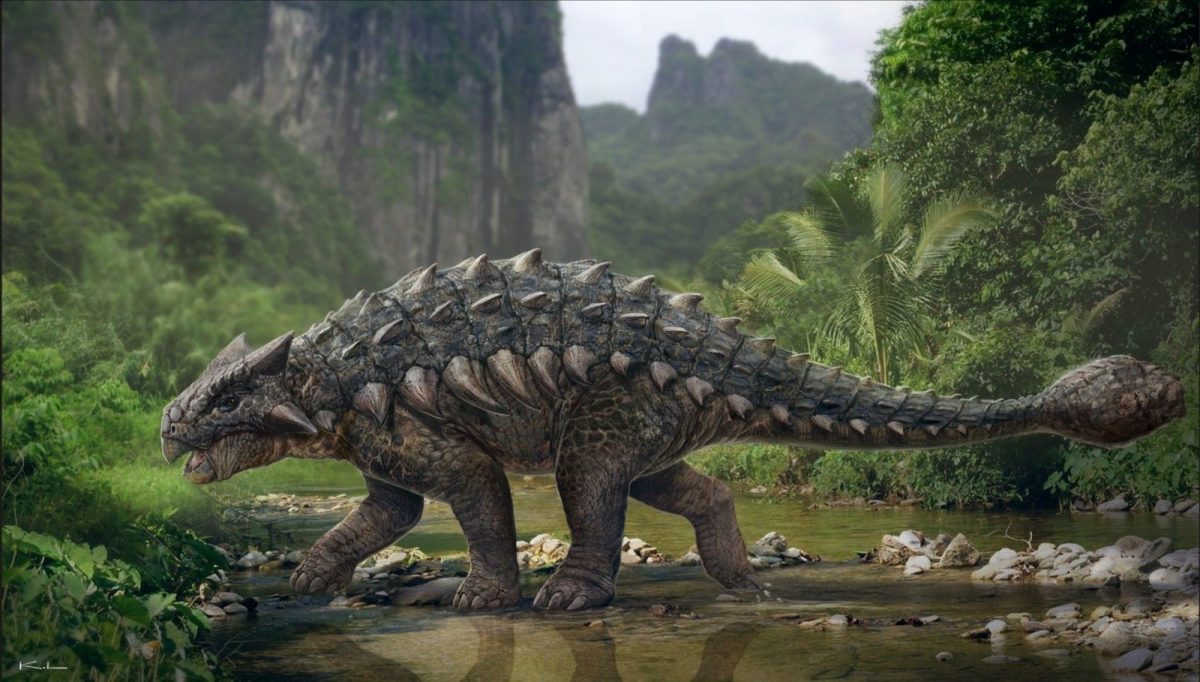
Ankylosaurus — The Living War Hammer
Not every terrifying killing method came from sharp teeth. Some dinosaurs turned their entire bodies into defensive weapons so effective that attacking them could mean death.
Ankylosaurus looked like a tank with legs. Its body was covered in thick bony armor plates called osteoderms. But the real horror was at the end of its tail — a massive bony club. This wasn’t decorative. It was a kinetic weapon.
Biomechanical modeling suggests Ankylosaurus could swing its tail with enough force to shatter bone. Imagine a multi-ton herbivore pivoting its hips and launching a solid mass of bone into a predator’s leg. A single well-placed strike could break a femur.
For a large predator like T. rex, that could mean immobilization — and immobilization in the Cretaceous often meant death.
What makes this method chilling is its simplicity. No finesse. No stealth. Just rotational force and devastating impact. Predators attacking from behind may have learned very quickly that the “easy meal” could turn into a career-ending mistake.
In a strange way, Ankylosaurus weaponized deterrence. It didn’t need to chase or ambush. It only needed to wait for something foolish enough to try.
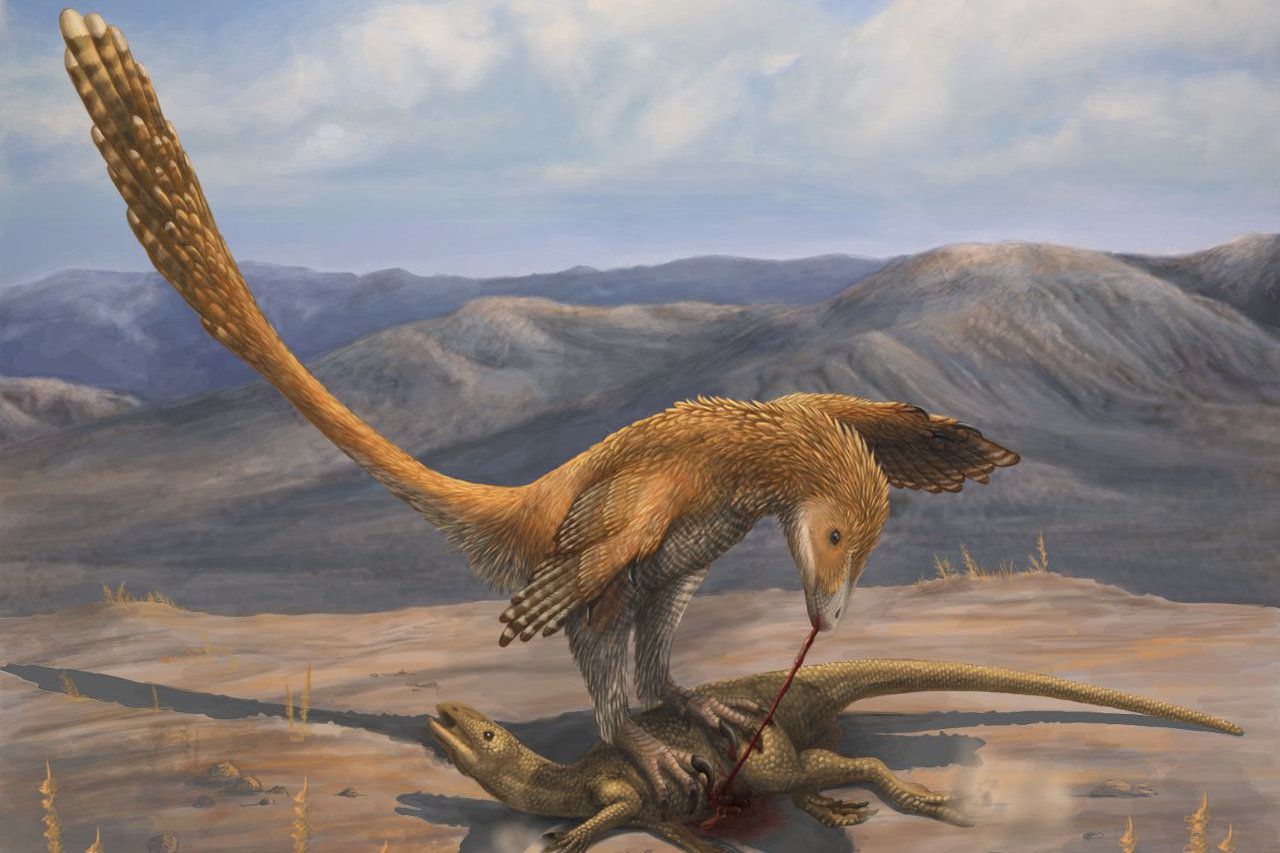
Deinonychus — The Coordinated Slasher
Deinonychus is often overshadowed by its smaller cousin Velociraptor, but in reality it was larger and possibly more formidable. Its sickle claws were even bigger, and its body was built for agility.
There’s ongoing debate about whether Deinonychus hunted in packs. Fossil sites showing multiple individuals near prey suggest the possibility, though it’s not fully proven. If it did hunt socially, the implications are disturbing.
A coordinated attack from multiple agile predators using slashing claws and rapid bites could overwhelm animals much larger than themselves. One distracts. Another strikes. A third anchors.
The sickle claw likely punctured deeply into muscle, possibly targeting soft underbellies or throat areas. Combined with rapid head movements and serrated teeth, the damage would accumulate quickly.
What makes this method terrifying is not sheer strength, but intelligence and coordination. Nature doesn’t need overwhelming size when it has strategy.
Predators that think — even in basic, instinctive ways — create a different kind of fear.
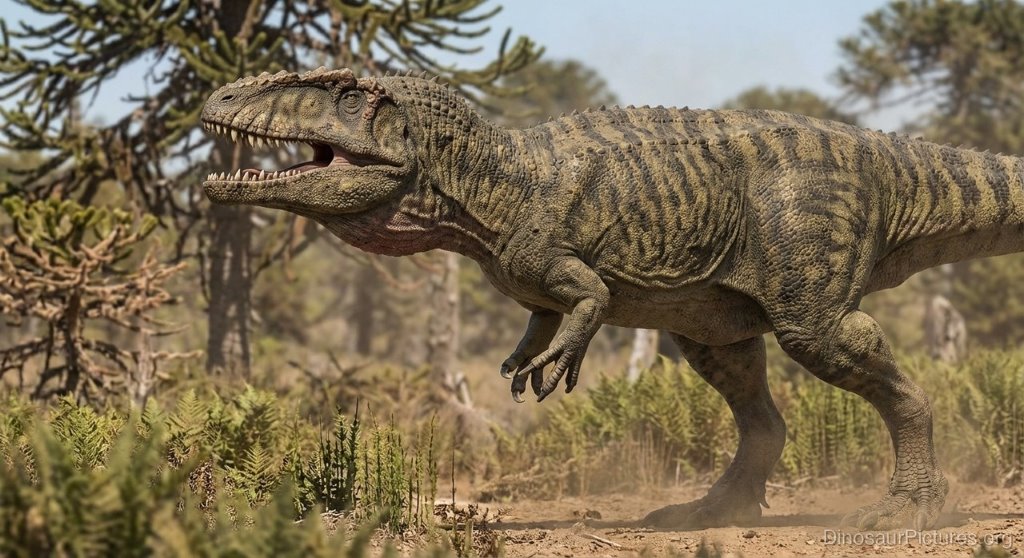
Giganotosaurus — The Relentless Pursuer
Giganotosaurus rivaled Tyrannosaurus rex in size, and in some measurements may have exceeded it in length. But its killing method likely differed significantly.
Its teeth were thinner and more blade-like, similar to Carcharodontosaurus. Instead of bone crushing, it probably relied on repeated slashing bites.
One theory suggests it hunted by delivering multiple deep wounds and then tracking weakened prey. Blood loss, shock, and exhaustion would finish the job.
This approach resembles some modern predators that injure first and let biology do the rest. It’s efficient. It conserves energy. And it minimizes direct risk.
Imagine being a massive herbivore struck once, escaping briefly, only to feel strength fading while the predator keeps pace.
There’s something psychologically harsher about that kind of hunt. Not a single overwhelming blow — but the slow realization that you are already lost.
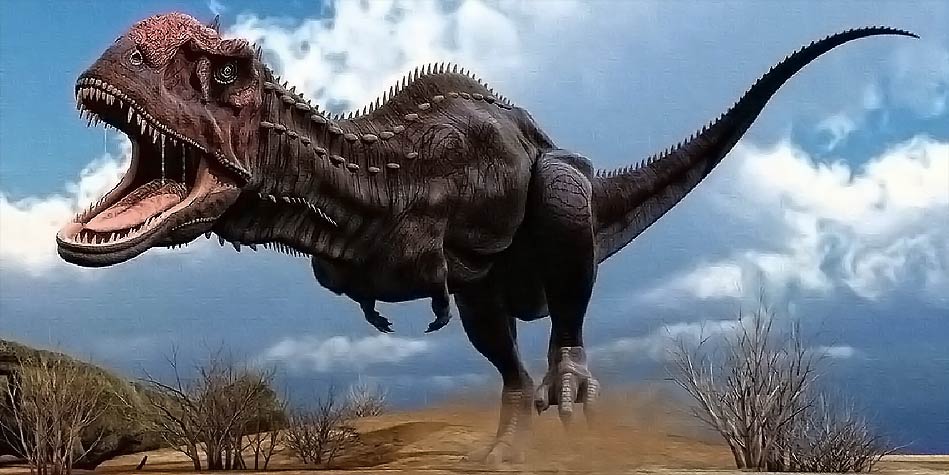
Majungasaurus — The Cannibal Predator
Majungasaurus wasn’t the largest theropod, but fossil evidence suggests something uniquely unsettling: cannibalism.
Bones attributed to Majungasaurus have been found bearing bite marks matching its own species. That indicates it sometimes fed on members of its kind.
Whether this was opportunistic scavenging or active predation is still debated. But the implication is clear — scarcity or competition pushed it to consume its own.
Its skull was short and deep, built for strong bites relative to its size. It may have used a firm grip-and-hold technique, clamping down and shaking.
Cannibalism doesn’t make a predator stronger in physical terms. It reveals something else: adaptability under pressure. When resources thin, some species turn inward.
That survival instinct — ruthless and unsentimental — might be the most terrifying evolutionary trait of all.
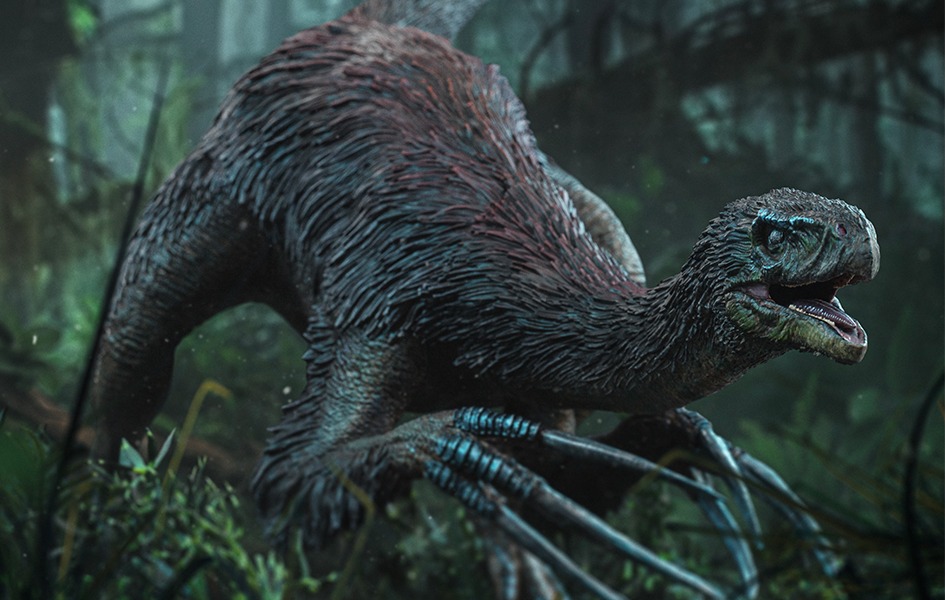
Therizinosaurus — The Unexpected Horror
At first glance, Therizinosaurus doesn’t look like a typical killer. It had a pot-bellied body, long neck, and is often thought to have been herbivorous. But its claws were enormous — over 2 feet long.
While it likely used these claws for feeding or display, the defensive potential is undeniable. Long, curved blades extending from its hands could disembowel an attacker with a single swipe.
If a predator approached too closely, those claws would not need to pierce deeply to cause catastrophic damage. A defensive slash could open muscle and organs.
Sometimes the most terrifying weapons aren’t designed for hunting — they’re built for warning.
And warnings in the dinosaur world were rarely subtle.
The Mechanics of Fear in the Mesozoic
What makes these killing methods so disturbing isn’t just the violence. It’s the specialization.
Every tooth shape, jaw hinge, claw curvature, and muscle attachment tells a story of adaptation. Evolution refined these creatures over millions of years, optimizing them for survival in ecosystems where hesitation meant extinction.
Some killed instantly with bone-shattering force.
Some carved and let blood loss do the work.
Some pinned and fed methodically.
Some struck defensively with blunt trauma strong enough to cripple giants.
The Mesozoic world wasn’t just large reptiles roaming freely. It was a dynamic arms race. Predators evolved stronger bites. Prey evolved armor. Hunters developed speed. Victims developed mass.
And through it all, the methods became more efficient, not more merciful.
When we look at these fossils today, it’s easy to see museum displays and skeleton mounts. But behind each bone was a living system designed to overpower something else.
That design — deliberate, mechanical, and refined by time — is what still makes these dinosaurs terrifying long after their extinction.